
Fall Trade Show Season Peak
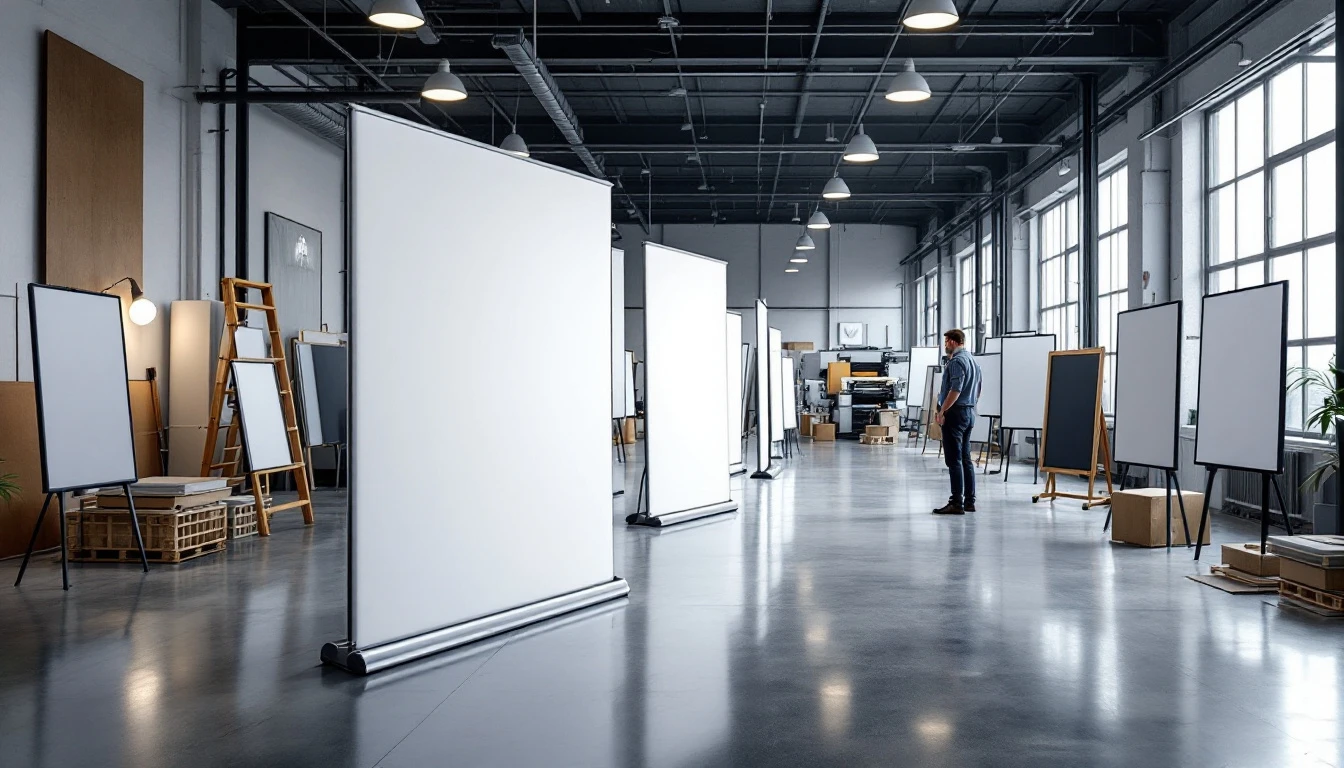
Fall is crunch season for pack-and-ship stores. Between walk-in shipping demand, holiday mail volume from mailbox customers, and print jobs backed up for year-end promotions, September through November tests whether your store operations can handle peak traffic without dropping the ball. October marks the busiest month, when commercial print orders overlap with retail shipping rushes and customers arrive expecting fast turnaround on everything from banners to business cards. For stores investing in professional printing capabilities—and specifically large-format display printing—the quality of output materials often determines whether customers return or shop elsewhere.
Professional printing services—custom banners, large-format posters. Backlit displays, and branded materials—create a visible gap between stores that deliver polished output and those that settle for rushed compromises. Research from trade show organizers shows that attendees form first impressions within three seconds of approaching a booth. And those impressions directly influence whether they qualify as serious leads or casual browsers. A polished, cohesive display signals investment, credibility, and attention to detail—qualities your print customers expect you to deliver.
The connection between print quality and customer retention isn't subtle. Stores that allocate resources to high-quality equipment and finishing options capture repeat business, schedule more corporate print contracts, and report higher margins on large-format jobs. Advance planning becomes the differentiator: ordering supplies and scheduling production eight to twelve weeks before peak season avoids last-minute compromises on paper stock, finishing options, and color accuracy—details that separate professional output from rushed work.
Order Timeline: 8–12 Weeks Out for Trade Show Display Printing
September represents the sweet spot for ordering supplies and scheduling production capacity that will carry your store through October and November demand. An 8–12 week lead time isn't arbitrary—it accounts for the full production cycle that separates professional output from rushed compromises. When you place supplier orders in early September, you're locking in inventory before the fall season floods print shops with competing requests.
Professional large-format printing follows a structured workflow: design approval, print production, finishing, and delivery. Design approval alone can take one to two weeks when you factor in proofing rounds and customer sign-off. Print production adds another two to three weeks for large-format banners, retractable stands, and multi-panel displays. Finishing—lamination, grommets, mounting, and edge sealing—requires additional days but transforms raw prints into durable products customers can use across multiple events. Delivery to the customer or direct shipping to their venue closes the timeline, and carriers need buffer time for cross-country deliveries or rush orders.
Skipping any of these phases to compress the schedule introduces risk. Design files approved without proper proofing often reveal color mismatches or resolution problems only after printing begins. Finishing steps rushed or eliminated leave materials vulnerable to wear, curling, or damage during customer setup. Last-minute orders force you to charge rush premiums—sometimes doubling base prices—while still sacrificing the quality control that protects your reputation.
September ordering gives your operation the breathing room to coordinate finishing work, manage material inventory, and schedule press time without bottlenecks. Revision requests that would derail a compressed timeline become manageable adjustments. By the time competing stores scramble to place supplier orders in late September or early October, you've already cleared production capacity and moved into fulfillment planning. That head start translates directly into customer satisfaction and repeat business.

Print Formats for Booth Impact
Customer booth dimensions and show floor layout determine which print formats will work for their space. A 10'×20' island booth has room for a 10-foot banner mounted at eye level across the back wall, creating a clear visual anchor visible from across the hall. That same setup overwhelms an 8'×10' corner booth, where a retractable standee paired with a table-top display keeps sight lines open without crowding the space.
Custom trade show banners and their widths follow a simple rule: match the booth footprint. Common widths run 8, 10, and 12 feet, aligning with standard booth configurations. Sight-line distance matters just as much—attendees walking past a row of booths 30 feet away need bold graphics and minimal text, while those browsing a small expo hall with tighter aisles can absorb more detail at 15 feet. Height depends on booth depth. Shallow booths (8–10 feet) benefit from banners mounted 6–7 feet high to avoid overpowering the space. Deeper booths (12–20 feet) support taller banners that remain visible from farther back in the hall.
Posters handle detailed messaging that banners can't. Standard sizes like 18×24 work well for product specs or pricing mounted at standing height on side walls. Larger 27×40 posters anchor feature walls or flank a central banner in island setups, creating a layered visual story. A 10'×20' island booth benefits from a 10-foot banner plus two 27×40 posters—one on each side—guiding attendees through the offer as they enter. An 8'×10' corner booth lacks wall space for large posters, so a compact standee near the aisle edge plus a table-top display at the counter keeps messaging visible without blocking traffic flow.
Format decisions drive customer results. Well-placed banners pull attendees toward booths from across the floor. Posters hold their attention once they step inside. Table-top displays and standees maximize visibility when floor space is tight, keeping booths approachable and easy to navigate during peak traffic hours.
Professional Finishing & Materials
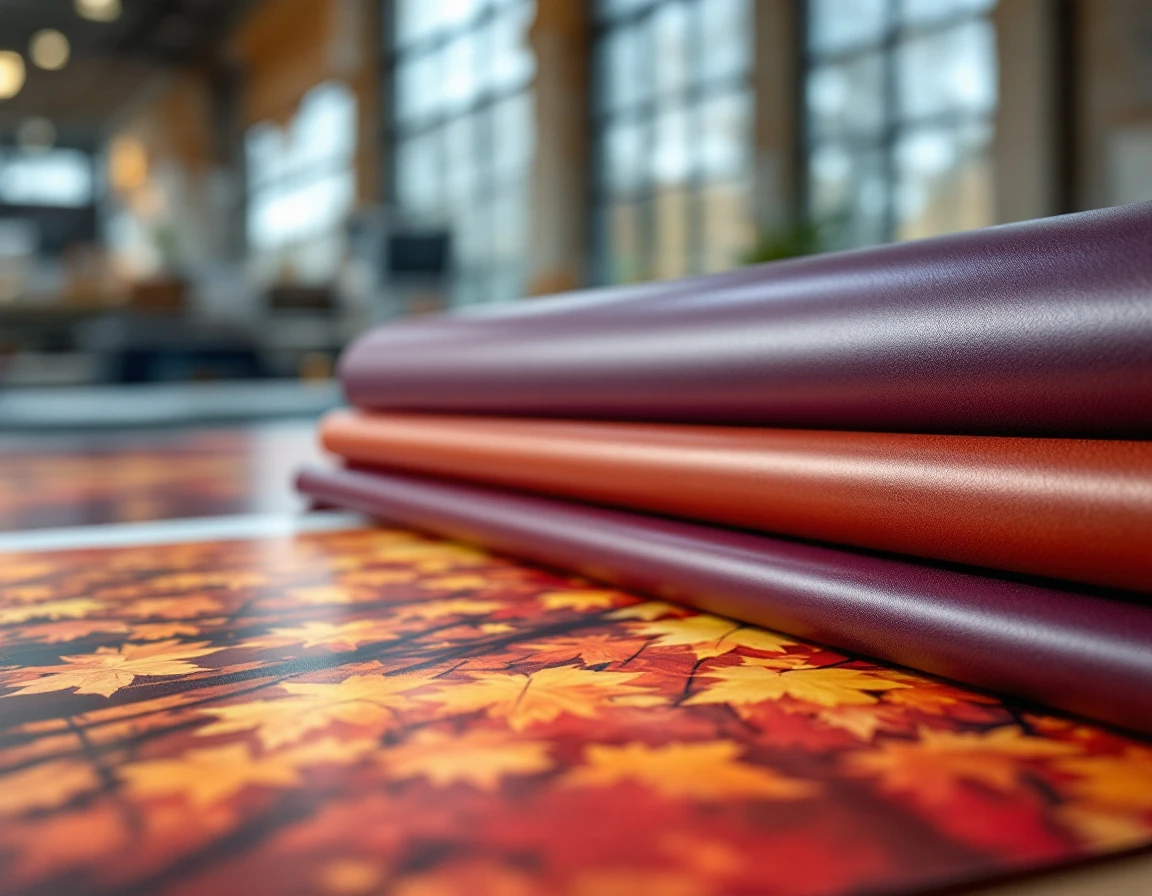
Finishing options protect customer investments and keep booth materials performing through multiple shows. Lamination shields banners from handling wear, humidity damage common in large convention centers, and the coffee spills that happen during setup. A matte finish reduces glare under bright exhibit hall lighting, while gloss lamination makes colors pop for high-impact graphics. Either option makes cleanup between shows faster, extending the life of printed surfaces that would otherwise show scuffs and fingerprints after a single event.
Mounting choices affect both durability and setup speed. Foam board backing prevents posters from curling during storage and transport, while aluminum composite panels add rigidity for freestanding displays and large-format prints that need to stay flat under air conditioning vents. UV coating enhances color vibrancy and protects against fading when booth materials sit under exhibit hall lights for three consecutive days.
Paper stock matters more than most customers realize. Heavy cardstock for table-top signs and handouts signals quality the moment an attendee picks it up, while lightweight stocks feel flimsy and undermine brand credibility. Premium materials justify booth presence—attendees notice the difference between professional finishing and rushed printing. Investing in edge sealing, proper mounting, and protective coatings reduces replacement costs and keeps booths looking sharp from the first show in September through the last event in November.
Booth Setup & Logistics
Display materials don't deliver themselves to the show floor, and poor planning turns production into chaos. Material weight and dimensions directly affect shipping costs. Handling fees, and installation time—factors that can drain customer budgets before the first attendee walks past their booth.
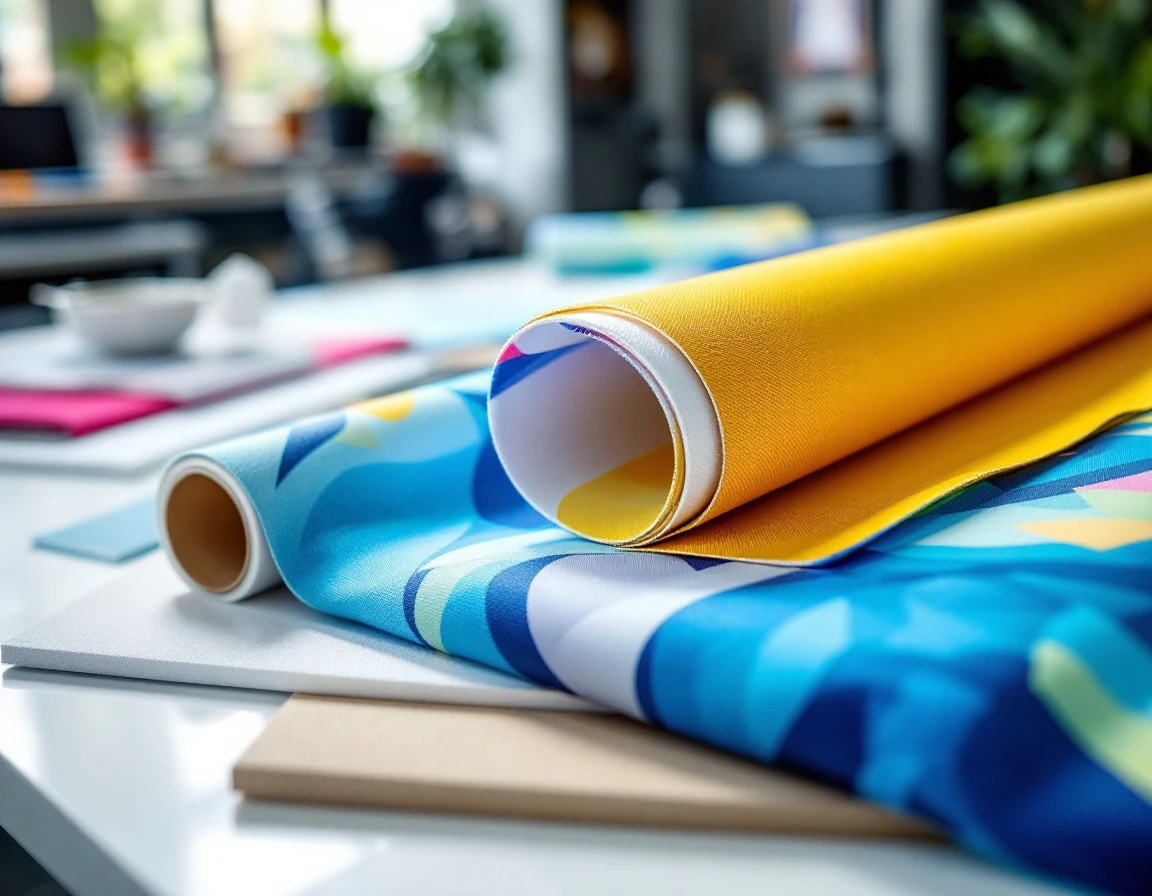
Lightweight formats like fabric banners and foam-board standees reduce freight costs compared to rigid panels or heavy-duty frames. Compact designs simplify transport, fit into smaller crates, and require fewer hands during setup. When you help customers choose materials with logistics in mind during the September planning window, you avoid surprises at the loading dock.
Confirm delivery dates with your production schedule and coordinate with customers to align arrival with their setup windows. Missing a delivery deadline because of unclear scheduling creates on-site bottlenecks that eat into their lead-generation time.
Pre-production planning eliminates installation crises. Pre-assemble modular components when possible, label all materials clearly, and create setup instructions that customers can follow without confusion. A planned sequence means faster booth assembly, lower labor costs, and no missed opportunities because banners arrived late or standees were packed in the wrong order.
Measuring Booth ROI & Impact
Professional trade show display printing isn't an expense—it's a lead-generation tool that pays dividends across multiple shows. To help customers justify the investment, walk them through the metrics that matter: lead volume, lead quality, and engagement signals from shows where they used professional materials compared to generic alternatives. Record booth dwell time, the number of meaningful conversations initiated, and follow-up interest rates to quantify the impact of polished displays on visitor behavior.
Calculate cost-per-qualified-lead to make the business case clear. For example, a $3,000 printing investment that generates 45 qualified leads delivers a cost-per-lead of $67. If generic materials produce the same volume at a $150 cost-per-lead due to lower engagement rates, professional printing saves $3,735 per show. Track these numbers across events to build a data-driven case for future investments.
Professional materials extend ROI through reuse. High-quality finishes—lamination, UV coating, durable mounting—mean banners, posters, and standees remain presentation-ready across multiple shows throughout the 2026 season and beyond. By deploying materials across several events rather than purchasing single-use alternatives, customers maintain booth impact while optimizing their materials budget. Document material condition after each show to forecast replacement cycles and plan orders during best production windows.
ParcelPuffin supports your store's shipping operations with tools built for pack-and-ship businesses. When you're coordinating print job deliveries, handling customer shipments, or managing logistics during fall peak season, our platform keeps materials moving from production to venue without bottlenecks.