

"2024–2025 Shipping Surcharge Impact on Independentnt Retailers
Carriers added peak surcharges, dimensional weight adjustments, and residential delivery fees throughout 2024 and 2025, compressing margins for independent pack-and-ship retailers already operating on thin profits. Understanding the shipping surcharge impact on independent retailers is critical to surviving margin pressure during peak seasons and beyond.
Parcel carriers (USPS, FedEx, UPS) implemented
Between 2024 and early 2025, USPS, FedEx, and UPS rolled out a wave of surcharge increases—covering fuel adjustments, dimensional weight pricing changes, and expanded peak-season fees—that squeezed independent retailer margins by 8–15 percent. These charges hit small pack-and-ship stores harder than large fulfillment centers because independent retailers ship lower volumes and lack the negotiating power to secure discounted carrier contracts.
As October 2026 arrives, the holiday peak season multiplies the financial impact of these surcharges. When package volume surges, each dimensional weight penalty and residential delivery fee compounds across thousands of shipments, turning what seemed like modest per-package costs into a material drag on profitability for independent shipping retailers.
How shipping surcharges affect small retailers grows more acute when volume explodes, making advance planning essential.
Independent retailers lack carrier-direct volume
National chains and big-box competitors enjoy carrier-direct volume discounts that independent pack-and-ship stores simply cannot match. When a retailer ships fifty packages a week instead of fifty thousand, carriers offer neither preferential rates nor dedicated account management. This pricing gap places smaller operators at an immediate disadvantage before a single box leaves the counter.
Margin compression leaves independent retailers facing three unattractive choices:
- absorb rising surcharges and watch profit evaporate
- raise customer prices and lose business to competitors with better rates
- search for alternative carriers that can compete on cost without sacrificing service quality
Multi-Carrier Rate Comparison for Pack-and-Ship POS
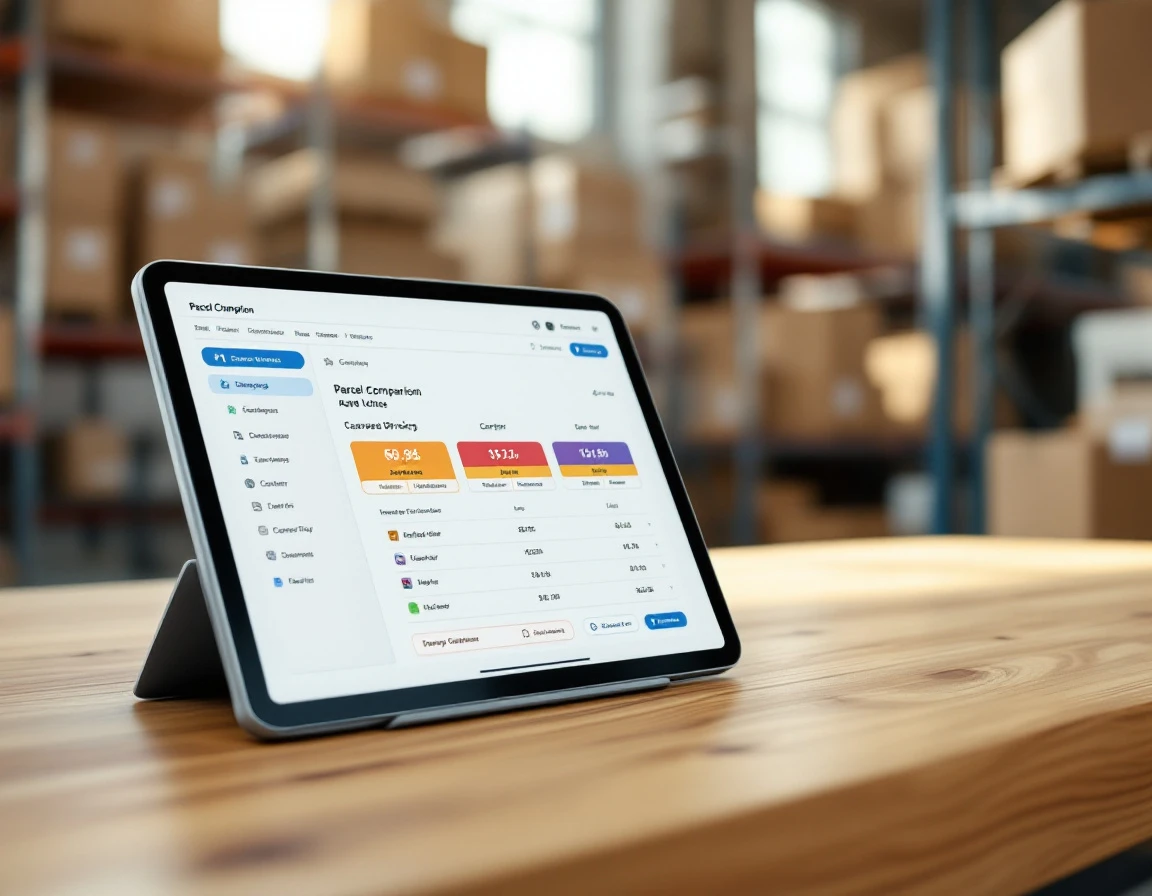
Modern POS systems display real-time rates from USPS, FedEx, and UPS side-by-side, eliminating manual rate lookup and guesswork. When a customer brings a package to your counter, the system connects via API to each carrier simultaneously, pulling live pricing based on package weight, dimensions, destination, and service level. Instead of defaulting to one carrier out of habit, you see every option at once. This multi-carrier rate comparison approach transforms how independent pack-and-ship retailers quote shipping to customers.
This transparent comparison reveals the lowest-cost carrier per shipment, accounting for surcharges, dimensional weight, and destination zone. A package heading to the West Coast shows clear pricing differences across carriers once fuel and residential surcharges are applied, with USPS flat rate emerging as the budget-friendly option. The cost advantage becomes apparent before you print the label, and choosing USPS preserves your customer's budget—a meaningful consideration when they're deciding whether to return.
Rate transparency enables retailers to select the best carrier before checkout, reducing post-sale margin erosion. When you absorb shipping costs as part of a bundled service, every dollar counts. Automated rate pulling updates when carriers adjust fees. So you always quote accurate net costs without manually checking carrier websites or outdated rate cards. This real-time visibility helps you pass savings to customers while protecting your own bottom line, especially during high-volume periods when even small per-package differences compound across hundreds of shipments.

Margin Recovery Through Accurate Quoting
Retailers who manually quote or guess carrier rates often underestimate the true cost of a shipment, especially when surcharges pile up. Without visibility into dimensional weight fees, residential delivery charges, and seasonal peak rates, stores quote low and absorb the difference. This silent margin loss can range from five to twelve percent per shipment—a hidden tax that erodes profitability with every transaction.
POS rate transparency solves this by pulling real-time carrier costs, including all applicable surcharges, before you quote the customer. When your system shows the actual cost plus your markup, you protect profit on every transaction.
The impact compounds quickly. Imagine an independent retailer shipping 3,000 parcels annually at an average shipping cost of $25. If manual quoting causes a three percent margin loss—just $0.75 per shipment—that adds up to $2,250 in lost revenue each year. Recovering that two to three percent across 2,000 to 10,000 annual parcels generates $2,000 to $15,000 in revenue recovery. That money belongs on your bottom line, not subsidizing incomplete rate data.
Real-time surcharge visibility also allows you to communicate rate increases to customers before they ship. Building trust and avoiding post-sale disputes when the final carrier invoice arrives higher than expected.
Competitive Advantage vs. Big-Box Rivals
National chains like The UPS Store and FedEx Office operate with closed-system POS terminals locked into single-carrier rates. That business model worked when customers valued convenience over cost. Today, price-sensitive shippers compare quotes on their phones before walking through your door. Independent retailers running multi-carrier POS systems can display real-time pricing from USPS, FedEx, and UPS—then sell the lowest-cost option. The result: lower net costs for customers, repeat business for you, and a service differentiator big-box competitors can't match.
Marketing "3-carrier price comparison at the counter" positions independent stores as customer advocates rather than commission-driven sales agents. When a residential ground shipment costs less through one carrier versus another, showing both rates builds trust. Big-box locations don't offer that transparency because their franchise agreements tie them to a single carrier.
Volume data from your POS unlocks another advantage: direct carrier negotiations. When your system tracks monthly shipment counts, average package weights, and service-level trends, you gain evidence to request better terms from regional carrier reps. Big-box chains operate under corporate contracts negotiated annually; they can't adapt when October 2026 peak season surcharges spike or when one carrier adjusts dimensional weight pricing mid-quarter. Independent retailers with transparent POS data can pivot quickly, steering volume to whichever carrier offers the best net rate that week.
Implementation Roadmap for October 2026
Deploying a multi-carrier POS system before October peak season gives independent retailers time to validate savings, train staff, and avoid rate-setting errors when counter volume spikes. Waiting until holiday shipments arrive leaves no room to catch pricing mistakes or refine carrier selection rules under pressure.
Start by evaluating a modern POS platform with built-in multi-carrier rate comparison—request a ParcelPuffin demo to see how real-time API integration surfaces USPS, FedEx, and UPS pricing side-by-side. Once you've selected a platform, allocate one to two weeks for API integration with your preferred carriers and rate table configuration. This setup phase includes mapping your existing service tiers to transparent shipping rates for pack-and-ship stores, so customers see accurate pricing at the counter.
Next, train your team to interpret real-time rate displays and communicate cost differences to customers. Staff should understand how dimensional weight, surcharges, and service levels affect the quoted price, and feel confident recommending the lowest-cost option. Before peak season begins, run a pilot rate comparison across five hundred to one thousand shipments to identify cost-reduction opportunities and validate that margin recovery aligns with projections.
Use pilot data to adjust carrier selection rules—if one carrier consistently beats competitors for specific package profiles, flag those shipments in your POS workflow. During October and November, monitor key metrics weekly. Average cost per shipment, carrier usage mix, and margin per service level. These dashboards confirm that savings trtranslate to your bottom line and strengthen your position in future carrier negotiations. Early deployment turns peak season into a validation period rather than a crisis.