
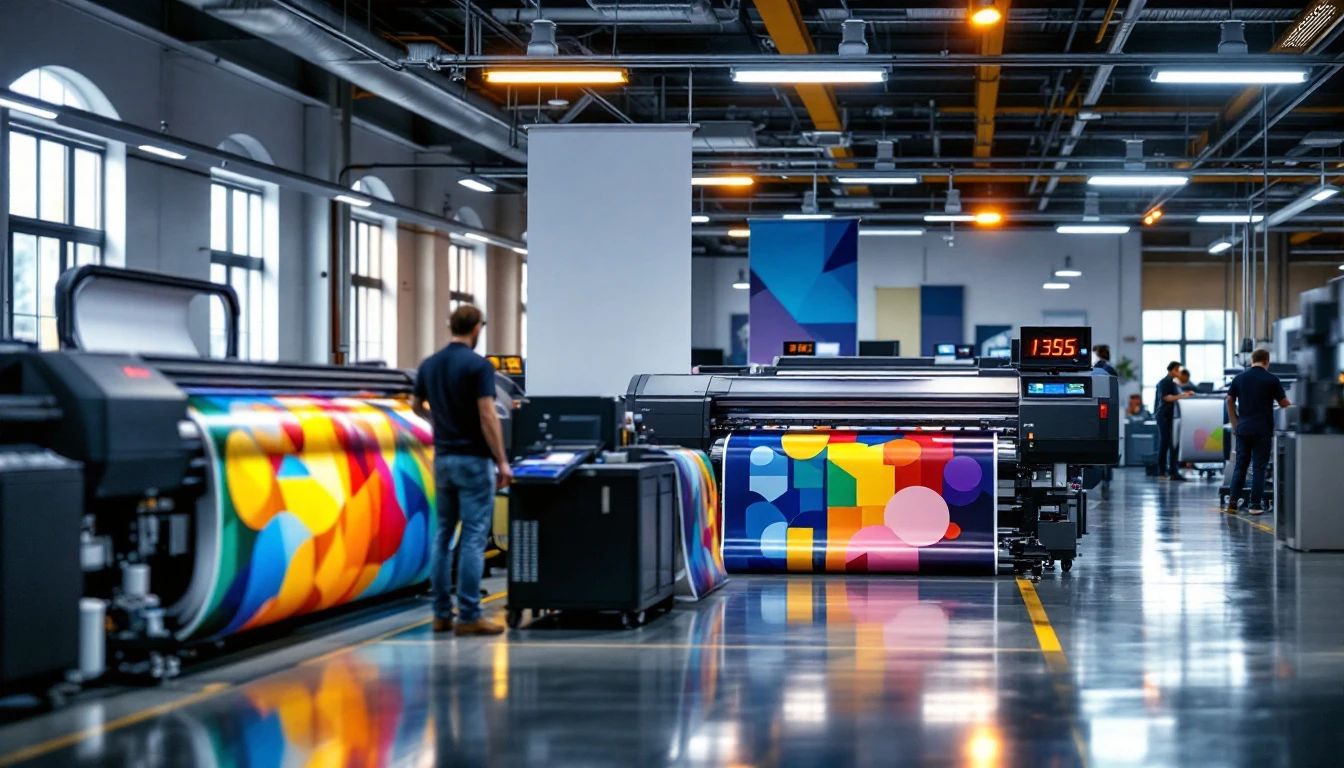
Trade Show vs. Conference Printing Needs
Event type determines both your printing priorities and where your budget goes. Trade shows and conferences may share a venue, but the materials that succeed at each event serve entirely different purposes. Understanding these distinctions prevents costly mistakes like ordering conference-style table toppers for a trade show booth or investing in delicate directional signage that won't survive repeated setup and teardown cycles. Planning large format printing for events or selecting between trade show printing services and conference banner printing starts with matching your materials to the event's actual demands.
Trade shows demand high-impact visual materials built to stop foot traffic in crowded exhibition halls. Roll-up banners, retractable displays, and modular booth graphics must be bold enough to attract attention from across the aisle while being durable enough to withstand frequent transport and assembly. These materials prioritize portability—lightweight aluminum frames, vinyl banners that roll into tubes, and snap-together poster stands that fit in checked luggage. Exhibitors typically cycle through multiple shows per year, so materials need to survive dozens of events without fading or fraying.
Conference printing, by contrast, focuses on professional credibility and wayfinding. Directional signage, speaker identification boards, and stage backdrops create a polished environment that reinforces brand authority. These materials often use heavier substrates like foam core or rigid PVC because they stay in one location throughout the event. Table toppers and registration desk graphics prioritize clean typography and consistent branding over attention-grabbing visuals.
Budget allocation follows suit: trade show exhibitors invest in reusable booth components, while conference organizers often commission single-use materials specific to that event's agenda and venue layout.
Large Format Printing for Events: Formats & Typical 2026 Costs
Understanding what you'll pay for common event materials helps you allocate print budgets before reaching out to vendors. Large format printing cost in 2026 varies based on material type, size, and finishing options, with clear pricing tiers that correspond to durability, portability, and visual impact.
Vinyl Banners: Budget-Friendly and Versatile
Vinyl banners remain the most economical choice for both indoor and outdoor event signage. A 24×36-inch banner is available in budget-grade 13-ounce vinyl, mid-range scrim vinyl with reinforced grommets, and premium weather-resistant material with UV coating, with pricing that reflects quality tier. Larger formats scale accordingly across budget, mid-range, and premium outdoor-rated options. Full-size 10×20-foot backdrops span from basic indoor vinyl to heavy-duty outdoor banners engineered with wind slits and pole pockets for professional installation.
Fabric Displays: Professional Presentation
Fabric displays deliver wrinkle-resistant graphics with a professional finish. Pop-up booth systems with fabric panels come in three tiers: budget-friendly kits with standard dye-sublimation printing, mid-range systems featuring aluminum frames for enhanced durability, and premium tension-fabric displays with case-to-counter conversion for maximum visual impact. Hanging fabric banners for conference centers are available in standard polyester for basic applications, or in premium knit fabric with silicone edges for frameless mounting systems that command attention.
Rigid Signage and Mounted Prints
Foam board signage provides portability without the wrinkles of rolled materials. A 24×36-inch foam-core poster costs $18–$28 for 3/16-inch board with matte printing, $35–$50 for mid-weight gator board with UV coating, and $60–$85 for premium 1/2-inch PVC-mounted prints with lamination. Directional signs on coroplast (18×24 inches) start at $12–$18 each, while mounted poster prints on rigid substrates for speaker headshots or sponsor recognition (20×30 inches) range from $40 to $90 depending on mounting method and surface finish.
Volume orders of ten or more pieces typically unlock 15–25 percent discounts across all formats, while rush production within 48 hours adds 30–50 percent to base pricing. Requesting quotes with exact quantities and delivery dates helps you receive accurate pricing that reflects these variables.
Banner Pricing & Vinyl Display Options
Vinyl banners remain the workhorse of event printing for good reason: they're affordable, durable, and ship easily. The material itself ranges from economy single-ply to premium double-sided options, each suited to different visibility needs and budgets. Standard sizes like 4×6 ft, 6×10 ft, and 8×20 ft offer better per-unit rates than custom dimensions, making them ideal for booths that can work within common frameworks.
In 2026, expect to pay roughly $1.50 to $3.50 per square foot for vinyl banners, with the final price driven by ink quality, finishing details, and turnaround speed. A standard 4×6 ft single-sided banner typically costs $40 to $80, while a large 10×20 ft backdrop runs $300 to $600. Eco-solvent inks cost more upfront but reduce odor and environmental impact compared to traditional solvent inks. Hemming and grommets add durability for outdoor use or frequent setup; double-sided printing nearly doubles the cost but maximizes visibility in high-traffic aisles.
For mid-sized booths—particularly 8×10 ft to 10×10 ft spaces—fabric displays often justify the premium over vinyl, offering richer colors, easier packing, and a more professional appearance that holds attention longer.
Fabric & Rigid Display Systems
Premium display materials deliver long-term value for teams running multiple conferences or trade shows each year. Fabric pop-up displays feature portable frames with dye-sublimated graphics that stretch over aluminum structures, creating wrinkle-free backdrops for booth walls, registration counters, and keynote stages.
These systems cost more upfront but typically survive 50+ uses without fading or tearing, making them a smart investment for repeat events.
Expect 2026 pricing around $2 to $5 per square foot for fabric displays, depending on frame complexity and print resolution. Rigid substrates — foam board, corrugated plastic, and aluminum composite panels — suit indoor conference environments where graphics remain stationary. Foam-mounted graphics work well for speaker identification signs and directional wayfinding, with pricing from $3 to $8 per square foot based on substrate weight and mounting method.
The total cost of ownership advantage becomes clear after three or four events: reusable fabric systems cost less per show than ordering fresh event printing materials each time. This benefit depends on quality production standards, so work closely with vendors who understand conference-grade finishing and material specifications covered in the vendor selection discussion.
Material Durability & Reusability ROI
The true cost of event printing extends beyond the invoice. For planners hosting a single trade show or conference, vinyl banners and disposable prints offer the most cost-effective path—lower upfront spend, simpler logistics, and no storage burden. But for teams running two to four events annually, the calculation shifts. Fabric displays and rigid systems carry premium pricing up front, yet recover that investment through reuse, with savings visible by the third or fourth deployment.
Event frequency and storage capability drive the ROI equation. Reusable fabric graphics require climate-controlled storage to prevent mildew and color fading, while vinyl teardown and disposal add labor costs that erode apparent savings. Organizations with warehouse access or dedicated storage can preserve fabric systems for years. Teams without those resources may find disposable materials more practical, even with recurring events.
Durability standards vary sharply by venue type.
Outdoor trade shows demand UV-resistant inks and weather-sealed edges—features that add cost but prevent mid-event failures.Climate-controlled conference centers allow lighter-weight materials and standard finishes. Events that recur annually or semi-annually justify investing in reusable systems, provided your team can maintain and store them between activations. For one-off or infrequent events, disposable formats keep budgets lean without sacrificing visual impact.
Vendor Selection & Quote Checklist
Selecting the right printing vendor starts with understanding the three main paths available to event planners:
- National online print shops offer the lowest cost with turnaround times between five and ten days, but customization options remain limited—you'll choose from preset templates and standard materials.
- Local print shops compete on price while delivering in three to seven days, and they typically offer flexibility on design revisions and material substitutions that online shops can't match.
- Event-specialized firms command premium pricing but deliver in one to three days, often including full-service booth support like on-site setup and emergency reprints.
Quote accuracy hinges on the specifications you provide. Vague requests—"we need a banner for our booth"—invite inflated estimates because vendors pad pricing to cover unknowns. Detailed specs enable apples-to-apples comparisons and protect your budget. Before requesting quotes, gather your event date and all associated deadlines, exact dimensions and quantities for each piece, material preferences (vinyl, fabric, rigid substrate), finish specifications (matte, glossy, or textured), design files or anticipated design fees, delivery location, and any installation support requirements.
Common Surprises That Inflate Final Costs
Rush fees, setup charges, and delivery costs catch unprepared planners off guard. A rush fee can add 25 to 50 percent to your total when you compress turnaround below a vendor's standard window. Setup charges appear when your design requires custom dielines or color matching beyond standard profiles. Delivery fees escalate when shipping to convention centers with restricted receiving hours or when you need weekend delivery to meet install deadlines.
Criteria for Vendor Comparison
Compare vendors across four dimensions: turnaround time relative to your event schedule, quality guarantees that cover reprints for defects, design support availability and associated fees, and revision limits within quoted pricing. A vendor offering two free design revisions beats one charging per change when you're refining booth graphics. Quality guarantees matter most for reusable displays where defects undermine your investment. For design workflow resources and production efficiency guides, visit ParcelPuffin's resource library to see how operational systems support complex event timelines.
Budget Planning by Event Type
Translating material options into working budgets helps planners allocate funds appropriately and avoid last-minute scrambles. Start with a clear understanding of typical cost ranges for three common scenarios, then build in contingency buffers to protect against rush fees and late-stage design changes.
For a small one-day trade show booth (10×10 ft), expect to spend around $1,500 total: an $800 vinyl banner for the backdrop, $300 in foam core signage for product callouts, and $400 for smaller tabletop displays. This budget fits most regional expos where custom event signage printing supports trade show display printing needs without large-scale investment.
A day-long regional conference serving 50–200 attendees typically requires $1,000–$3,000 in signage and directional materials. Budget $500 for a main stage banner, $200 each for four breakout room directionals ($800 total), and $600 for a registration backdrop—roughly $2,000 overall. This tier balances professional presentation with moderate material investment.
For multi-day national trade shows or high-traffic venues, reusable fabric systems justify higher upfront costs. A $2,500 fabric pop-up system plus $800 in portable signage totals $3,300 initially. Amortized over three events, that investment drops to approximately $1,100 per event, making premium materials cost-effective for frequent exhibitors.
Break budgets into fixed costs—design fees, file preparation—and variable costs like printing, delivery, and installation. Add a 10–15% contingency buffer to absorb unexpected revisions or rush charges. Understanding these benchmarks early enables vendor outreach well before August–September deadlines, when print shops face capacity constraints and turnaround times lengthen.