

Why ADA Signage Matters for Sign Shops
ADA-compliant signage represents a profitable specialty that sets quality-focused shops apart while serving customers who need reliable compliance partners.
Most sign shops ignore accessible signage
Walk into most sign shops and ask about ADA-compliant signage, and you'll see hesitation. Many providers skip accessible signage entirely because the requirements feel complex or unfamiliar. That gap creates opportunity for shops willing to learn the standards.
Local businesses face real legal exposure when their signage doesn't meet accessibility requirements. A restaurant without compliant restroom signs or an office building missing proper directional signage can trigger complaints and costly remediation. Businesses actively seek sign providers who understand compliance requirements and can deliver correct specifications the first time.
Quality-conscious retailers actively seek
Businesses that value professionalism look for vendors who understand compliance requirements and deliver work that protects them from legal exposure. When a property manager, healthcare facility, or corporate office needs signage, they want a partner who knows ADA standards without requiring supervision.
Demonstrating ADA compliance expertise signals that your shop operates at a higher standard than competitors who treat accessibility as an afterthought. Clients recognize this knowledge reduces their liability risk and means their facilities meet federal requirements from the start, avoiding costly retrofits or penalties.
Core ADA Signage Requirements
The Americans with Disabilities Act establishes specific technical standards that transform abstract accessibility principles into measurable production specifications. For permanent room identification signs—restrooms, stairwells, exits, and office suites—the baseline requirements create a clear compliance checklist.
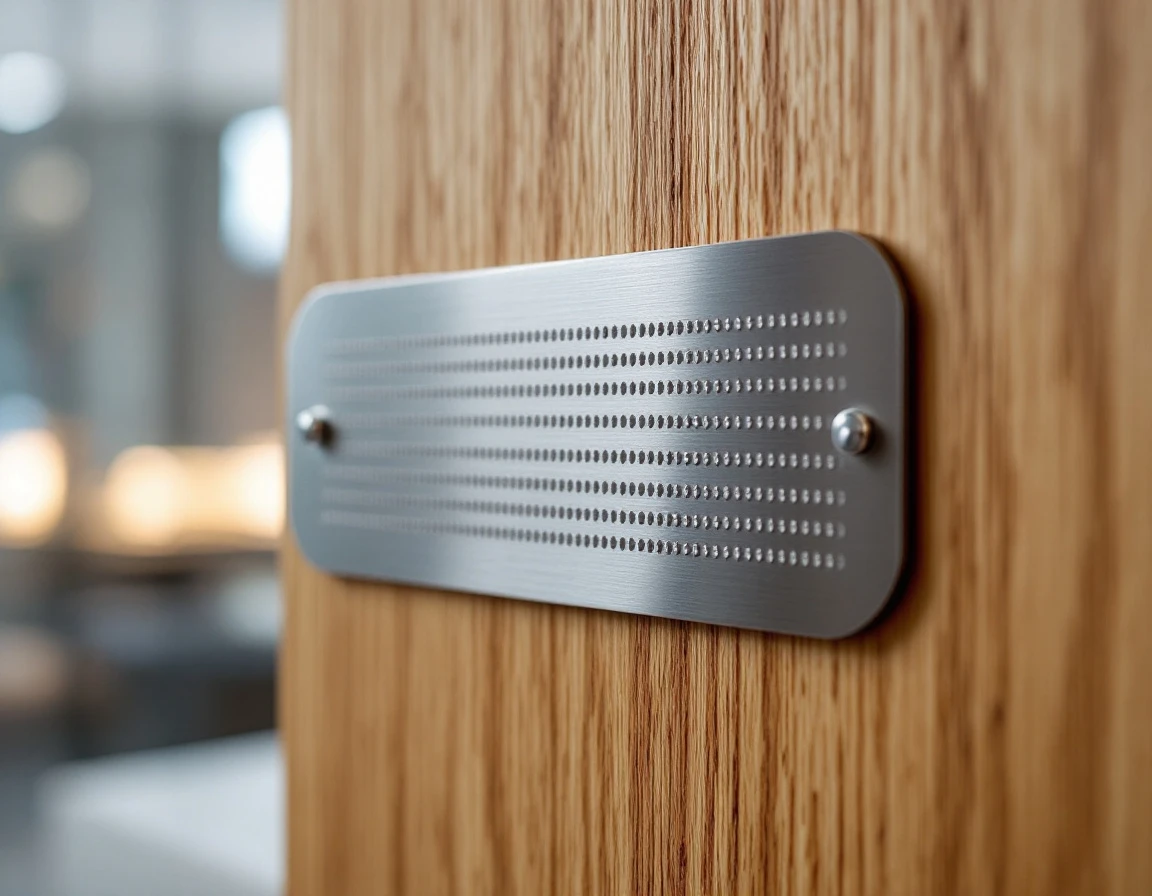
Tactile characters must measure between 0.625 and 2 inches tall, with raised edges standing at least 1/32 inch above the background surface. Grade 2 braille sits 1.25 to 1.5 inches below the tactile text baseline. Never touching the raised letters. This precise spacing means fingertip navigation works reliably for readers moving from text to braille translation. Mount these signs between 48 and 60 inches from the floor, measured to the baseline of the lowest character, and position them on the latch side of doors.
Visual contrast requirements demand at least 70% difference between text and background colors. A light gray letter on white fails this threshold—think black on white, white on dark brown, or navy on cream. Fonts must be sans-serif with consistent stroke width throughout each character, avoiding decorative flourishes or thin-thick variation that reduces legibility at distance.
Wayfinding Standards Beyond Room Signs
Directional signage in hallways and outdoor pathways doesn't require tactile elements or braille, but visual legibility rules still apply. Text height scales to viewing distance: a hallway sign meant to be read from 15 feet needs characters at least 1.5 inches tall. Overhead signs demand even larger dimensions. Outdoor wayfinding signs must maintain sufficient color contrast to remain legible despite weather exposure and fading.
Material Durability and Installation Precision
ADA-compliant signage materials resist wear from repeated touch. Acrylic with subsurface engraving outlasts vinyl lettering that peels after months of fingertip contact. Photopolymer provides durable tactile surfaces that maintain edge definition through years of use. Installation accuracy matters as much as fabrication—a sign mounted two inches too high or on the wrong wall side fails inspection regardless of production quality. Train installers to carry measuring tools and reference ADA mounting standards at every job site, treating placement as part of the compliance specification rather than an afterthought.
Building Your ADA Signage Production Process
Most sign shops can integrate ADA compliance into existing workflows without buying specialized equipment or hiring dedicated staff. Start with a production audit that identifies where compliance checks naturally fit. Review your design approval process first—add a checkpoint that verifies text height (0.625 to 2 inches for tactile characters), contrast ratio (with legible distinction between background and foreground), and braille placement (1.25 to 1.5 inches below the corresponding text baseline) before files move to production.
Material selection determines whether your signs stay compliant for years or fail within months. Source subsurface-applied tactile tape for permanent installations—surface-applied alternatives peel and create liability. Braille embossers need consistent dome height and spacing. Test samples from any new supplier against ADA dimensional standards before committing to bulk orders. For adhesive-backed signs, specify products rated for the installation environment—indoor acrylic works fine for office suite markers but fails on exterior applications.
Staff training takes less time than you think. A focused 90-minute session covers the five most common violations:
- Incorrect braille grade (use Grade 2 for standard text)
- Missing pictograms on permanent room signs
- Improper mounting height (48 to 60 inches to the baseline)
- Inadequate contrast
- Non-compliant tactile character dimensions
Build quality control into your shipping routine. Before any ADA sign leaves your shop, one person verifies tactile character height with calipers, checks braille dot spacing with a gauge, and confirms contrast using a luminance meter or contrast app. This final checkpoint catches errors that cost more to fix after installation than during production.

Positioning ADA Signage as a Premium Upsell
ADA-compliant signage justifies a higher price point because it solves three business-critical problems your customers can't afford to ignore. First, compliance protects customers from legal liability. The Department of Justice treats signage violations as discrimination under Title III. And facilities without proper wayfinding, restroom identification, or room numbers face civil complaints and retrofit orders. When you position accessible signage as liability reduction rather than an optional upgrade, the conversation shifts from cost to risk management.
Second, accessible signage communicates brand values that attract a broader customer base. Retail stores with clear, tactile directories signal that all shoppers are welcome. Healthcare facilities with compliant wayfinding reduce patient stress and improve the experience for visitors with vision impairments. Restaurants that invest in accessible menu boards demonstrate attention to detail that influences how diners perceive quality across the entire operation. Businesses understand that accessibility isn't charity — it's customer service that drives loyalty and repeat visits.
Third, ADA requirements are mandatory, not optional. New construction and alterations must meet current standards, and facilities built before 1993 still need barrier removal when readily achievable. This creates ongoing demand that doesn't depend on economic cycles.
The math supports premium pricing. Material costs for braille embossing and tactile elements add modest overhead — subsurface tape, specialized tooling, and quality-controlled production add material expense but not prohibitive amounts. Labor increases reflect design review time, precision installation, and compliance verification. A typical 15 to 25 percent price premium over standard signage reflects the specialized knowledge, tighter tolerances, and reduced customer risk your shop delivers.
Frame your quote around value: "This investment protects your facility from violations and means every visitor can navigate independently." Quality-conscious customers recognize that compliant signage costs more because it solves real problems.
Auditing Your Current Signage Offerings
Start by pulling project records from the past six months and selecting a representative sample of twenty to thirty jobs. Mark each project based on whether it would pass an ADA inspection today. Look for the telltale gaps: missing braille, tactile characters outside the 0.625 to 2-inch height range, insufficient visual contrast, or incorrect mounting heights. This quick assessment reveals how much of your current portfolio already meets compliance standards and where production processes need adjustment.
Document the material and production gaps by project category. Room identification signs may lack subsurface tactile tape, while directional wayfinding signs might use incorrect font sizes for viewing distance. Note which jobs used proper braille embossing and which relied on applied stick-on braille that won't hold up to inspection. This inventory becomes your baseline for sourcing decisions and staff training priorities.
Identify customer segments most likely to request compliant signage going forward:
- Healthcare facilities face strict enforcement
- Retail chains standardize accessibility across locations
- Government contracts mandate compliance from the start
Create a ninety-day action plan that sequences the work logically. Dedicate weeks one and two to staff training on measurement standards and material handling. Establish supplier partnerships for tactile materials during week three. Build pricing templates and customer-facing pitch materials in weeks four through six. Then launch targeted outreach to healthcare, retail, and government contacts from weeks seven through twelve. This timeline balances learning curve with revenue momentum.
Converting Compliance Into Long-Term Customer
The real business advantage of ADA compliance expertise isn't landing the first project — it's building a relationship that extends across years. Once a business chooses your shop for compliant signage, they return when facilities expand, tenants change, or regulations update. Compliance becomes a recurring revenue driver because buildings evolve constantly: new offices open, wayfinding systems need refreshes, and branding updates require new tactile room identification.
Turn compliance knowledge into a billable service by offering facility signage audits to existing customers. Provide a free initial walk-through that identifies non-compliant signs, then charge for remediation projects. This low-cost assessment creates high-margin follow-on work while positioning your shop as a proactive partner rather than a transactional vendor.
Multi-location customers represent the most stable revenue stream. Healthcare systems replacing signs across twelve clinics, retail chains updating twenty store locations, and government facilities managing ongoing compliance all need vendors who understand requirements without constant oversight. These enterprise accounts choose compliance experts because mistakes multiply across locations, and they pay premium rates for reliability.
Sign shop owners who master ADA standards win longer sales cycles with higher average order values. Compliance expertise transforms your business from competing on price for one-off projects into securing repeat contracts from quality-conscious organizations.
Compliance expertise transforms your business from competing on price for one-off projects into securing repeat contracts from quality-conscious organizations. Differentiation through compliance knowledge creates sustainable competitive advantage — the kind that keeps customers coming back year after year.