
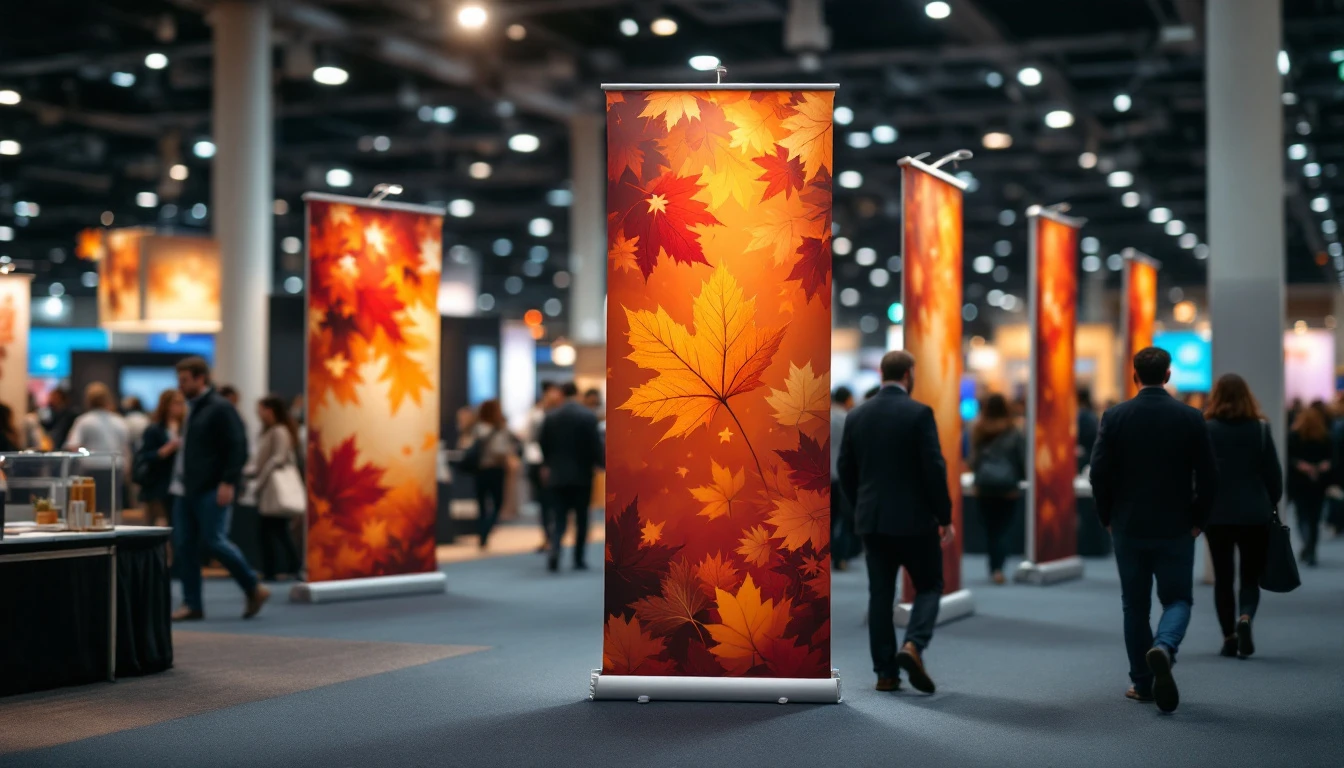
Why Professional Trade Show Banners and Posters Matter for Your Store
Fall trade show season runs strong between October and November 2026. If you run a pack-and-ship store, you know trade show attendees need banners and posters fast—and they turn to local print shops when online lead times stretch too long. Production schedules fill up, and the stores that prepare inventory and design templates now will capture orders that competitors miss.
Banners and posters remain the fastest way businesses build brand authority and attract booth traffic in crowded exhibition halls. When trade show attendees walk past dozens of competing displays, professional print materials create visual anchors that stop them mid-stride. A well-designed banner communicates a value proposition before a single word is spoken, filtering qualified leads toward the booth while competitors blend into the background. These materials work as silent salespeople, establishing credibility at a glance.
Professional-quality print materials signal that a business takes itself seriously. Attendees evaluate booth credibility within seconds, and generic or poorly executed displays communicate budget constraints rather than industry leadership. The exhibitors who invest in sharp, cohesive print materials differentiate themselves as authorities worth engaging. With October events closing out the year's most productive trade show season, now is the time for your store to prepare for the rush—stock materials, finalize design templates, and train staff on turnaround options before customers arrive with tight deadlines.
Print Material Types and ROI
Trade show print materials fall into three categories, each solving distinct visibility and engagement challenges:
- Banners deliver long-range brand recognition
- Posters drive targeted messaging at mid-range
- Display materials create professional staging that maximizes every square foot of booth space
Understanding the cost-to-impact ratio for each type helps you guide customers toward the right investment.
Banners: Visibility and Brand Recall
Vertical banners and hanging signage work best when visibility is the primary goal. A 3-foot by 8-foot retractable banner positioned at the booth entrance stops attendees scanning the aisle from 20 feet away. Large-format hanging banners suspended above a booth create sightlines across crowded exhibit halls, making a brand recognizable before visitors arrive at the table. Expect to charge $75 to $200 for retractable banners and $300 to $600 for overhead installations, depending on size and material weight. Customers choose banners when their booth competes with dozens of neighbors and they need stopping power from a distance.
Posters: Foot Traffic and Targeted Messaging
Posters work well for delivering specific messages once attendees approach a booth. A well-designed poster mounted at eye level can communicate product benefits, event promotions, or appointment scheduling at a glance. Eye-catching color contrast and clean typography make the difference between a passing glance and a conversation starter. Poster printing offers flexible budget options, with basic prints available at entry-level pricing and premium mounted and laminated versions commanding higher investment. Customers use posters to segment messaging by audience—one for retailers, another for distributors—without overwhelming their banner real estate.
Display Materials: Booth Space ROI
Table wraps, backdrop systems, and tension fabric displays maximize booth space utilization by turning every surface into branded real estate. A fitted table wrap transforms a standard folding table into a professional presentation surface, while modular backdrop systems create defined zones within larger booth footprints. These custom trade show display materials raise perceived brand value—attendees associate polished staging with established companies. Investment in table wraps and pop-up backdrop systems varies based on customization and scale, but both represent cost-effective alternatives to purchasing additional furniture. Display materials work best when booth size exceeds 10 feet by 10 feet and the customer needs to create visual structure without additional furniture costs.
Banner Design and Sizing Strategy
Choosing the right banner size starts with booth footprint. Standard 8'×3' banners fit tabletop displays and 10×10 booth backdrops, while 10'×8' banners anchor larger 10×20 spaces. Retractable roll-ups (typically 33"×80") work as flexible side panels or entryway markers. Each format serves a specific visibility challenge, but all share one critical requirement: the message must register clearly from 15 to 20 feet away—the distance at which attendees decide whether to approach a booth.
High-impact designs follow a three-part formula. Start with one dominant image that reflects the product or service in action. Add a single headline (five to seven words maximum) that answers "Why stop here?" Finally, include high contrast between text and background—dark text on white, or reversed white on bold color—with generous whitespace around the call-to-action. Text-heavy banners with multiple competing messages get skimmed and forgotten. Clean designs that balance bold imagery with minimal copy pull traffic and start conversations before the customer says a word.

Poster Placement and Messaging
Posters work best as secondary messaging tools or attention-grabbers at booth entry points, guiding attendees toward specific actions once the banner has done its job. Unlike banners that establish presence from across the aisle, posters function as tactical signage—directing traffic to demos, highlighting product benefits at display stations, or promoting booth-exclusive offers near lead capture areas.
Placement strategy determines how each poster performs. A vertical poster at the booth entrance should welcome attendees and direct them inside with a simple benefit statement. At product display areas, horizontal shelf-mounted posters work well to call out features or pricing. Near lead capture stations, posters need a direct call-to-action: "Scan to download our buyer's guide" or "Enter to win—drop your card here."
High-performing trade show posters follow one rule: one core message per poster. Effective examples pair a benefit statement with a clear next step—"Free audit included with demo" beats generic copy every time. Keep text under ten words and use high-contrast colors that match the banner palette for visual consistency across the booth.
Professional Exhibition Printing Services and Deadlines
Professional printing turnaround runs between seven and fourteen business days for standard orders. Rush production cuts that window down but adds twenty to forty percent to total cost and increases the risk of delivery delays if files need revisions. The tightest deadlines land on orders placed in late September for November shows, where a single approval delay can push delivery past booth setup dates.
For events in the first two weeks of October, customers should finalize banner and poster designs between September first and fifth. They need to submit print-ready files no later than September tenth to allow for standard turnaround and carrier transit time. Expect delivery between September twentieth and thirtieth, giving them time for pre-show inspection and packing. Late-October and November events require orders placed by mid-September at the absolute latest.
Before customers submit files to your print operation, they need these essentials:
- Brand guidelines including logo files and color specifications
- Final approved copy with no placeholders
- High-resolution images at three hundred dpi or higher
- Exact dimensions for booth space and display hardware
Missing any of these extends the timeline by days or weeks while the designer tracks down assets or waits for stakeholder approval.
Design revision cycles are the silent timeline killer. Internal reviews that drag past target submission dates compress production time into windows that only rush orders can meet—if the printer can even accommodate the deadline.
Cost Breakdown and Budget Guidance
Understanding material costs helps you guide customers toward the right investment for their booth impact. Vinyl banners typically range from $80 to $300 depending on size, material grade, and finishing options. A standard 8'×3' economy vinyl banner runs around $100, while premium 10'×8' backdrops with reinforced grommets and UV-resistant coating can reach $250–$300. Retractable roll-up banners cost $150 to $400. With mid-range models offering excellent durability and portability for $200–$250.
Custom event posters and banners follow volume-based pricing that rewards bulk orders. For quantities of 100 or more, expect $2 to $8 per unit depending on paper stock, size, and finish. Ordering 200 posters instead of 50 can cut per-unit costs measurably, making it worthwhile to plan for multiple events or leave inventory for future shows. Custom display materials—fabric graphics, countertop displays, or foam-mounted boards—add $500 to $2,000 to the budget but provide reusable staging elements that justify the investment across multiple events.
For a 10×10 booth, customers should budget $800 to $1,500 for professional banners and posters that meet readability standards and withstand event wear. Economy vinyl saves upfront dollars but may show creases or fading after one show, while premium finishes maintain crisp appearance across five to ten events. Spending an extra $100 on durable materials protects against booth traffic loss caused by wrinkled or faded graphics that undermine brand credibility. Professional-quality printing costs less than the revenue lost when attendees walk past a poorly presented booth.
Next Steps: Preparing Your Store for Trade Show Season
You've seen the cost breakdowns, sizing guidance, and design principles. Now it's time to prepare your store for the fall trade show rush. The pack-and-ship stores that capture trade show orders are the ones that set up processes well before customers arrive with tight deadlines.
Start by stocking your most common banner sizes—8'×3' and retractable 33"×80" models. Keep vinyl in both economy and premium grades so you can offer options based on customer budget and reuse plans. Create design templates with brand-neutral layouts that customers can customize with their logo and messaging. This cuts design time from hours to minutes when someone walks in needing materials for an event three weeks out.
Train your staff on turnaround timelines. They should know which orders qualify for standard seven-to-fourteen-day production, which need rush fees, and when to suggest alternatives if the deadline is too tight. Set up a simple intake checklist that confirms booth dimensions, event date, and file specifications before accepting the order. This prevents revision delays that compress production windows.
Review your carrier options. Customers need banners and posters to arrive intact and on time. Compare rates and transit times for your most common shipping zones, and know which carriers offer tracking that lets customers monitor delivery. Choose your material types based on what customers request most often, and keep backup stock for rush orders.
Lock in your supplier orders by mid-September so you have materials on hand for October events. Professional trade show banners and posters represent repeat business if you deliver quality on time—prepare now, and you'll capture orders that other stores miss. ParcelPuffin's printing services help pack-and-ship stores meet tight deadlines with quality trade show print materials that keep customers coming back.