

July–August Peak Season Context
College move-in season drives the year's highest volume of residential shipping, creating carrier capacity constraints and longer transit windows for dorm-bound packages. If you're shipping bedding, textbooks, or electronics, solid pack dorm supplies shipping tips help families avoid delays and unexpected fees during this annual rush.
July and August shipping volumes to college
College-bound shipments surge 40–60% above normal levels during July and August as families across the country send bedding, storage bins, and dorm essentials to campus addresses. This annual spike strains carrier networks at precisely the moment students need guaranteed delivery before orientation weekends.
Capacity constraints during peak season translate directly into longer transit windows and unexpected surcharges. Carriers prioritize commercial accounts and high-volume shippers, leaving residential college shipments vulnerable to delays when sorting facilities reach maximum throughput. Planning shipments for early July rather than mid-August helps families avoid the worst bottlenecks.
Early planning and correct packing
Families who start their packing and shipping strategy three to four weeks before move-in deadlines typically reduce rush fees measurably compared to those who ship the final week of August. Carriers charge premium rates for expedited service during the college peak, and last-minute bookings often force you into express tiers you didn't budget for.
Universities enforce move-in schedules with little flexibility. Missing your assigned arrival window can mean forfeited housing deposits or reassignment to alternate dorms. Starting early gives you buffer time if a shipment encounters carrier delays during this high-volume period.
Room-by-Room Packing Checklist for Dorm Supplies Shipping
Breaking your packing plan into room-based categories prevents duplicate shipments and forgotten essentials that trigger expensive emergency courier orders during the August rush. Start with three primary zones: bedroom basics, bathroom supplies, and study essentials. For each category, separate must-have items from nice-to-haves so critical boxes ship first and arrive before move-in day, while supplemental items follow on slower, less expensive ground services.
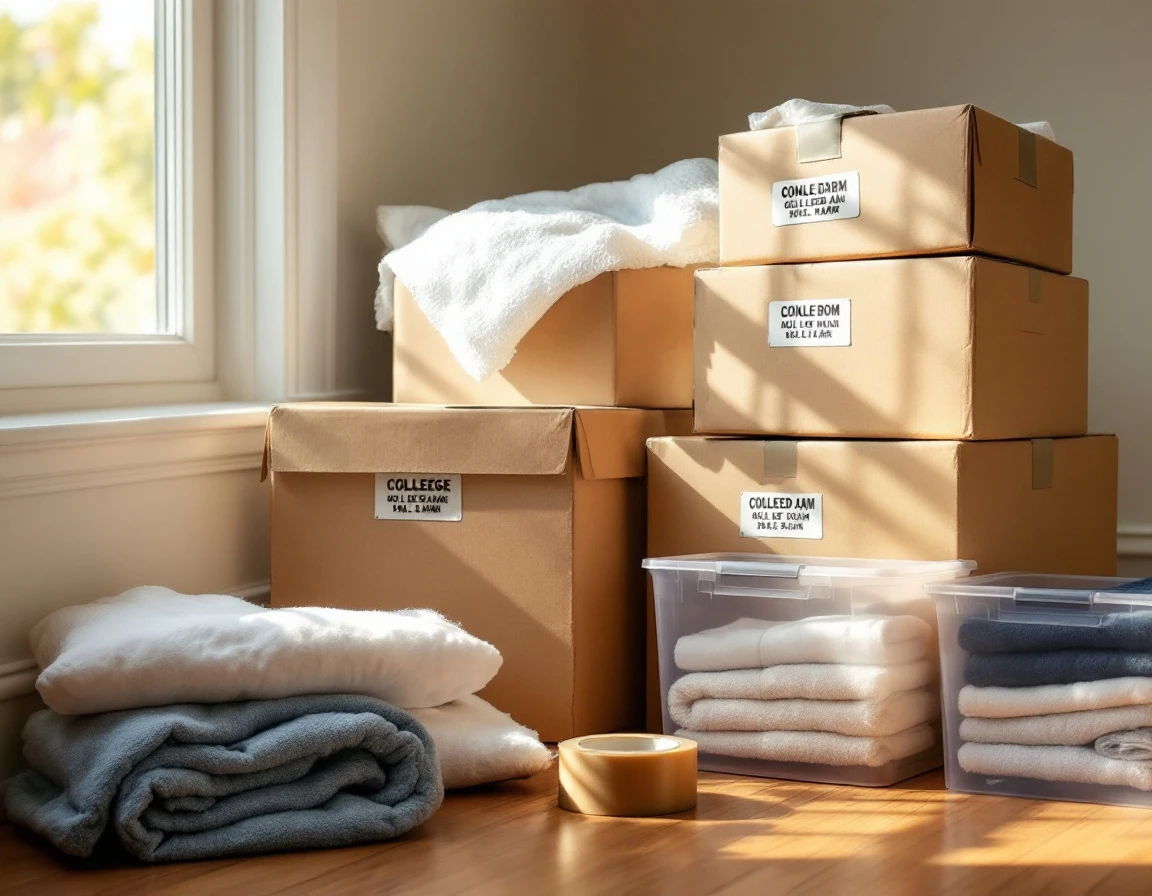
Label every box with both the destination room and a brief contents summary. Write "Bedroom – Bedding and Pillows" or "Bathroom – Toiletries and Towels" directly on the shipping label so carriers handle boxes appropriately and students can verify packages at campus mail centers without opening each carton. Clear labeling speeds unpacking and reduces the risk of misplaced boxes when multiple families share loading dock time during peak arrival windows.
Prioritize bedding, toiletries, textbooks, and a week of clothing in your first shipment. These items meet immediate move-in needs and keep students functional while additional boxes arrive over the following days. Pack seasonal clothing, décor, and non-essential tech accessories in later shipments using economy ground options that cost less but take seven to ten days instead of three. This tiered approach spreads carrier costs across slower services without compromising access to critical supplies.
Before packing anything, confirm dorm room dimensions and review your campus housing portal for prohibited items. Many schools ban microwaves, space heaters, and certain extension cords. Shipping restricted items wastes money on return freight and delays your student's setup. Measure available closet and desk space to avoid over-packing furniture or storage bins that won't fit, which forces costly mid-semester returns or local donations.
Fragile Item Packing Standards
Electronics, mirrors, lamps, and dishware consistently top the list of damaged dorm items reported during peak season. Proper cushioning protects your investment and prevents the headache of filing damage claims or paying to re-ship replacement items weeks into the semester when you're scrambling to settle into classes.
For electronics like laptops, gaming systems, tablets, and monitors, wrap each item individually in small-bubble bubble wrap — the smaller bubbles conform better to irregular shapes and provide superior shock absorption. Place the wrapped item in a box with at least two inches of cushioning material on all sides: packing peanuts, foam inserts, or crumpled kraft paper all work. Never use newspaper directly against electronics, as newsprint can transfer to screens.
Mirrors and glassware require double-boxing. Pack the wrapped item in a smaller inner box with dense foam or bubble wrap, then nest that box inside a larger outer box with additional cushioning between the two layers. This double-wall construction absorbs impacts that would otherwise crack glass or shatter ceramics.
Pack heavier items like textbooks or small appliances in smaller boxes to keep total weight manageable — carriers charge dimensional weight penalties on oversized packages. And heavy boxes are more likely to be dropped. Reserve larger boxes for lighter, bulkier items like bedding or clothing. Always declare high-value items separately when shipping laptops or gaming systems, as standard carrier liability caps at $100 per package unless you purchase additional insurance coverage.

Carrier Selection and Rate Comparison
USPS typically offers the lowest rates for packages under 20 pounds, making it the go-to choice for single-box shipments of bedding, clothing, or desk accessories. For heavier multi-box shipments — say, fifteen boxes totaling 200 pounds — UPS and FedEx often provide better per-pound pricing and more reliable tracking. A typical scenario: shipping a box of textbooks from Boston to Austin costs least via USPS Priority Mail, with UPS Ground and FedEx Ground both charging a premium for comparable service. Scale that across ten boxes, and your carrier choice can swing your total shipping bill enough to affect your bottom line.
Dimensional weight pricing becomes the hidden cost during peak season. Carriers charge based on whichever is greater: actual weight or dimensional weight (length × width × height ÷ 166 for UPS and FedEx, ÷ 194 for USPS Priority Mail). An oversized but lightweight box of pillows or a mini-fridge carton can trigger dimensional weight charges that double the shipping cost during July and August, when carriers enforce stricter measurement rules.
Locking in rates early in July — before mid-July peak-season surcharges apply — can trim your total shipping bill by a meaningful amount. Many carriers offer volume discounts for families shipping multiple boxes to the same destination, but these rates require advance negotiation four to six weeks before move-in. Use real-time rate comparison tools to evaluate all three carriers simultaneously. Factoring in fuel surcharges that climb in late July. The difference between booking July 10 and July 28 can add several dollars per box across a multi-shipment move-in plan.
Shipping Timeline and Deadline Strategy
Start planning your dorm shipments with August 10 as your target move-in date. Then work backward through the calendar. Ship essential items — medication, bedding, and electronics — by July 10 to give USPS or your carrier a full four weeks before dorm check-in opens. Lower-priority supplies like décor, extra towels, and non-urgent kitchen items can follow by July 20. But don't push later than that window.
Standard transit time estimates break down during July and August peak season. A package that normally takes three days from your location to campus may take five to seven days when carrier volume spikes. Add two extra days for warehouse processing delays, and you're looking at a full week or more from drop-off to delivery. Splitting your shipments by urgency protects against this uncertainty — if the second batch gets delayed, your student still has essentials on arrival day.
Contact campus housing before you ship anything. Confirm the earliest date they'll accept packages, and ask whether they hold deliveries in a mail center or deliver directly to dorm rooms. Set tracking alerts through your carrier's app or website, and if a package hasn't moved in 48 hours after the expected delivery date, call carrier support immediately. Peak season doesn't give you time to wait and hope — you need to escalate quickly to catch problems before move-in day arrives.
Cost Calculation and Budget Locking
Before you print a single shipping label, calculate the total freight cost using carrier websites or in-store quoting tools. USPS, UPS, and FedEx all provide rate calculators that account for package weight, dimensions, and destination zip code. Enter your campus address and box dimensions to see real numbers. This step prevents sticker shock at the counter and helps you compare carriers accurately.
Dimensional weight pricing matters more during peak season. Carriers calculate dimensional weight by multiplying box length, width, and height (in inches), then dividing by the dimensional divisor — typically 139 for FedEx and UPS Ground. If your dimensional weight exceeds actual weight, you pay the higher figure. A loosely packed 20-inch cube weighing five pounds can cost the same as a dense 15-pound box. Pack efficiently to avoid paying for air.
Peak-season surcharges add 10–20% to standard rates between mid-July and late August. A $12 ground shipment on July 5 may cost $14–15 by July 25 as carriers implement residential surcharges. Lock in rates by booking and prepaying early in July, before surcharge windows open. Some carriers offer small discounts — often 2–5% — for prepaid multi-box shipments.
Build a 10–15% contingency buffer into your budget. A worked example: five standard boxes to Ohio State University, shipped via UPS Ground in early July, costs approximately $120–150. Wait until late July, and the same shipment climbs to $180 or more after surcharges apply. That $30–60 difference pays for an extra lamp or printer cartridges. Pre-calculate, lock rates early, and pad your budget for last-minute additions.