

What is Dimensional Weight Pricing
Dimensional weight pricing is a method carriers use to charge based on package size rather than actual weight alone, so shippers pay for the space their boxes occupy in delivery trucks.

Dimensional weight pricing charges carriers based on box
Most shippers assume they're paying for how much a package weighs. But carriers have a different calculation in mind. Dimensional weight — sometimes called DIM weight — charges you based on how much space your package occupies in the delivery truck. Not what it weighs on a scale.
Here's the formula carriers use: multiply the box's length, width, and height (in inches) to get total cubic inches. Then divide that number by a carrier-specific divisor — typically between 150 and 200. UPS and FedEx use 139 for domestic ground shipments, while USPS uses 166 for Priority Mail. The result is your dimensional weight in pounds.
If your dimensional weight exceeds the actual weight, you pay for the dimensional weight. That's why a large box of pillows can cost more to ship than a small box of books, even though the books weigh far more.
Whichever is greater—actual weight or dimensional weight
Carriers compare both figures and charge for the larger one. Your twenty-pound box pays for twenty pounds. Your five-pound box that measures large enough to calculate as eight pounds pays for eight pounds.
Most carriers apply dimensional weight pricing to packages exceeding one pound per 166 cubic inches. Below that threshold, you pay actual weight. Above it, the carrier runs both calculations and bills whichever yields more revenue—which means oversized packaging costs you more even when the contents weigh very little.
This billing method affects lightweight products shipped in large boxes most severely. A three-pound shipment in a box sized for ten pounds pays for ten pounds, turning packaging choices into direct cost drivers.
How Dimensional Weight Shipping Works
Each major carrier applies its own rules when calculating dimensional weight. USPS Priority Mail Express doesn't use dimensional weight at all — you pay actual weight regardless of package size. USPS Priority Mail applies a 150 divisor for machinable parcels and 166 for irregular shapes. UPS Ground and FedEx Ground both use 166 as their standard divisor.
The formula is simple: multiply length × width × height in inches, then divide by the carrier's divisor. The result is your dimensional weight in pounds. If dimensional weight exceeds actual weight, you're charged for the dimensional figure. Measurement rounding rules differ by carrier — UPS rounds each dimension to the nearest inch, while USPS rounds up any fraction of an inch, which can push small packages across pricing thresholds.
Consider two 3-pound packages. Package A measures 12 × 12 × 12 inches (1,728 cubic inches ÷ 166 = 10.4 pounds dimensional weight). Package B measures 10 × 8 × 6 inches (480 cubic inches ÷ 166 = 2.9 pounds dimensional weight). Package A ships at the 10-pound rate despite weighing only 3 pounds. Package B ships at actual weight. Same contents, different box, three times the shipping cost.
Carriers enforce dimensional weight pricing because truck space is finite. A lightweight, oversized box occupies the same cubic footage as a dense, heavy package that generates more revenue per cubic foot. Use a dimensional weight calculator to compare carrier-specific dimensional weight charges before printing labels.
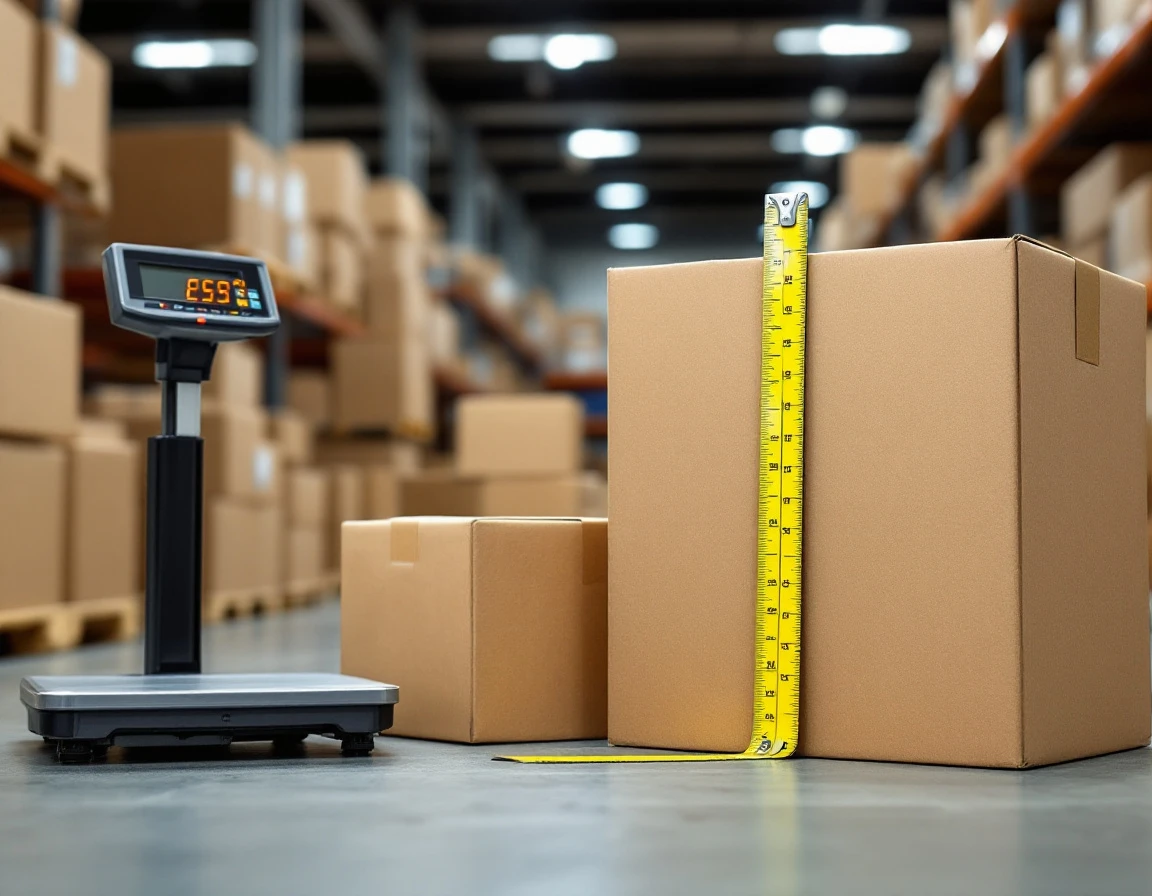
Dimensional Weight vs. Actual Weight
Actual weight is what the package reads on your scale. Dimensional weight is what the carrier calculates based on how much space that box occupies in the truck. The difference between these two numbers determines which one you pay for — and the gap can be startling.
Consider a pillow shipment: one pound on the scale, but packaged in a box measuring 24 × 18 × 8 inches. That's 3,456 cubic inches. Divide by a typical carrier divisor of 166, and you get a dimensional weight of roughly 21 pounds. The carrier bills you for 21 pounds, not the one pound you thought you were shipping. You're paying for air.
Now take the opposite scenario: a five-pound electronic device packed tightly in a 6 × 4 × 3 inch box. That's 72 cubic inches, yielding a dimensional weight around one pound. Here, actual weight wins — you're charged for the five pounds the package truly weighs, because density protects you from dimensional weight pricing.
Shippers who check both metrics before taping the box shut can predict when they'll face a dimensional penalty. Light, bulky items trigger inflated per-shipment costs. Dense items escape the surcharge entirely. Understanding this distinction before you print the label helps you decide whether to downsize the box or accept the dimensional charge.
Practical Packaging Optimization
Right-sizing boxes is the single most effective tactic to reduce dimensional weight charges, yet many shippers still default to the same few box sizes for every order. Start by matching package dimensions to product size — use fitted boxes or variable-depth mailers that eliminate empty space rather than filling oversized containers with cushioning materials.
Replace air pillows and foam peanuts with crinkle paper or kraft paper for lightweight cushioning. These materials protect products just as well for most shipments while adding minimal weight. The difference between two ounces of paper and six ounces of air pillows might seem small, but when combined with right-sized boxes, the cumulative effect on dimensional weight calculations adds up across hundreds of shipments.
Group light items together whenever possible to avoid multiple dimensional weight hits. Shipping three small items in separate boxes means paying dimensional weight charges three times, while consolidating them into one optimized box typically costs less even after adding dividers or extra cushioning. The savings multiply when you're shipping multiple orders to the same customer or fulfilling multi-item purchases.
Round down internal dimensions during box selection — a 12.1-inch dimension still costs the same as 13 inches once carriers round up their measurements. This single adjustment can shift packages into lower dimensional weight brackets without changing how you pack products. Weigh and measure every box type in your fulfillment process rather than spot-checking, because consistent measurement prevents surprises at the carrier counter.
These five strategies combine to produce cost reductions per shipment that make a meaningful difference to your bottom line. Use a dimensional weight calculator before sealing each box to confirm you're not crossing into a higher billing bracket. Testing dimensions takes thirty seconds and catches expensive mistakes before they reach the carrier.

Cost Reduction in Action
Consider a clothing retailer shipping lightweight apparel orders each month. Currently, they use a standard mailer for most items — hoodies, jeans, folded shirts — that could comfortably fit in a downsized poly mailer. The larger box triggers a higher dimensional weight calculation, while the right-sized mailer reduces this burden. With Priority Mail pricing structured around weight tiers, each properly sized package brings measurable cost savings that compound across a monthly shipping volume.
Multiply that across 200 monthly shipments: $420 per month, or just over $5,000 annually. That margin improvement comes from a single month of work — measuring bestselling items, testing smaller packaging with a dimensional weight calculator. And reordering supplies. Customers receive the same product in the same condition, but the business keeps an extra five thousand dollars that was previously handed to the carrier for empty air.
This creates a quiet competitive advantage. While competitors continue overpaying for oversized packaging, optimized shippers operate on healthier margins without raising prices. Eventually, cost-conscious competitors will catch on and follow suit, but the businesses that act now capture immediate savings and build a repeatable process for evaluating every new product line through a dimensional weight lens.