

Back-to-School Direct Mail Printing Campaign Timing
July represents the critical window for print shops to launch back-to-school direct mail printing campaigns before August brings peak competitor saturation. Shops that move now capture more orders because their mail pieces arrive when buying intent is highest—not when every competitor floods mailboxes at once. August sees postal costs climb as volume spikes, and response rates drop when parents face decision fatigue from competing offers.
Back-to-school purchasing decisions concentrate in late July, when parents shift from planning mode to active buying. Mail pieces hitting doorsteps by August 1–5 reach families at exactly the right moment. For 2026, that means launching campaigns by July 15 to account for print production, postal delivery, and any last-minute adjustments.
Print shops integrating their campaign management tools with POS and job tracking systems in July position themselves to handle the volume surge efficiently. Automated customer outreach, faster turnaround times, and real-time inventory visibility turn July preparation into August revenue.
POS Printing Management and Direct Mail System Integration
The shops that see the highest return on back-to-school campaigns aren't running more creative—they're running tighter systems. When your point-of-sale platform connects directly to your direct mail management for print shops, customer data flows automatically from transaction to campaign in a single workflow. No manual exports, no spreadsheet cleanup, no lag time between order and outreach.
Here's how the integration works in practice: A parent places a bulk printing order for custom notebooks in early June. Your POS logs the customer contact information, order details, and product preferences. That data feeds into your mail tool, which automatically assigns the customer to a segment—say, "bulk printing clients with school-age children." When you're ready to launch a back-to-school flyer campaign in mid-July, the audience is already built and waiting. What used to take days of manual list-building now happens in hours.
Job management software that syncs with your printing equipment eliminates another bottleneck. Print queues update in real time, inventory tracking prevents over-booking on popular card stock during peak weeks, and turnaround times drop by a meaningful margin. Shops without this integration lose capacity when August demand hits—they're still entering data by hand while integrated competitors are already printing and shipping.
Automation is the differentiator. When contact capture, audience segmentation, and job scheduling all talk to each other, you gain the speed and precision needed to respond to seasonal demand without adding headcount or overtime hours.
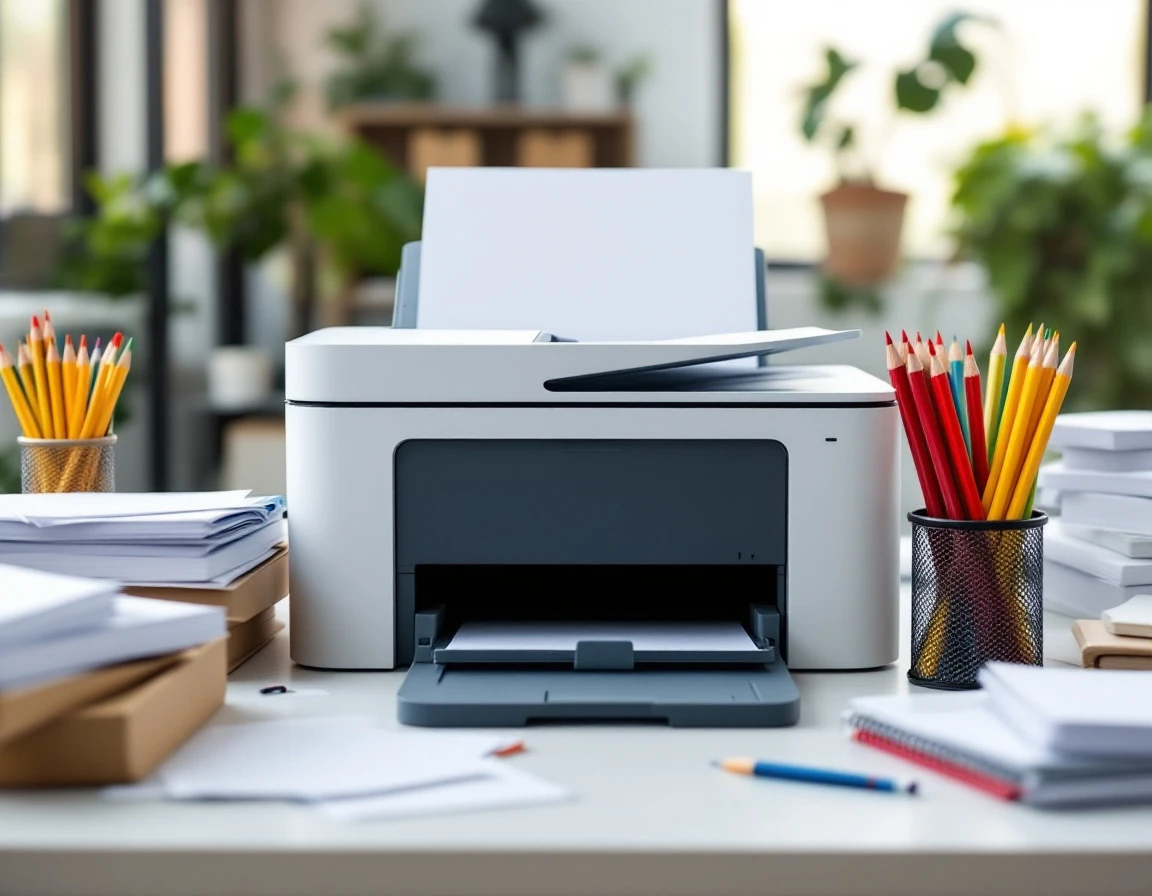
Inventory Tracking for Volume Spikes
Integrated inventory systems give print shops real-time visibility into paper, ink, and finishing supplies across all locations. When a print shop back-to-school campaign calls for 50,000 postcards in week two of July, connected POS and job management platforms alert you to order additional cardstock by July first, preventing production delays mid-campaign.
Automatic reorder thresholds protect shops from the common July–August trap: running out of high-demand materials when back-to-school orders peak. Your system monitors stock levels as jobs move through production, syncing updates across POS, job management, and mail systems in real time.
Multi-location visibility means your downtown shop can see what's available at your suburban location before promising a tight deadline to a customer. This connected approach keeps campaigns on schedule and prevents the scramble for emergency material orders at premium prices.
Customer Targeting and Automation
POS data transforms direct mail from guesswork into precision targeting. Customer type, purchase frequency, geolocation, and product category interest feed directly into campaign tools, creating microsegments that match your best-performing audiences. Schools ordering classroom supplies, educators purchasing lamination materials, and parents buying student planners each receive offers built around their past behavior and proven needs.
Automation rules trigger follow-up campaigns without manual intervention. If a school placed an order in May, the system automatically queues a discounted back-to-school mailer for early July delivery. Targeted campaigns to past customers yield response rates three times higher than blanket mailings because the message matches demonstrated interest.
Personalization at scale merges POS customer names, past orders, and preferences directly into mail pieces. Set up segments by July 5, launch the first batch by July 12, and track which customer groups drive the highest order values throughout August.
July Back-to-School Printing Strategy Setup Checklist
Breaking down the July roadmap into weekly actions keeps your back-to-school printing strategy on track and mail in customer hands during the critical August 1–5 decision window. Each checkpoint builds toward your response rate target while avoiding the bottleneck that hits when every other shop launches in mid-August.
- Week 1 (July 1–7): Audit your current POS data to identify missing fields like email addresses, purchase categories, or location tags. Integrate your direct mail tool with your existing system so customer records flow automatically. Track your data quality rate—aim for complete records on at least 85% of your audience.
- Week 2 (July 8–14): Build audience segments based on past purchase behavior and location proximity. Design mail templates that speak to each segment's needs, and finalize your inventory of materials needed for production runs. Confirm your segment size meets minimum thresholds for cost-effective printing.
- Week 3 (July 15–21): Launch your first batch of mail pieces to arrive by August 1. Monitor response rates daily and adjust creative or offers for your second batch based on early feedback.
- Week 4 (July 22–31): Scale the segments showing strong response and prepare your final push before competitor saturation takes hold in August.

ROI Benchmarks and Measurement
The business case for integration becomes clear when you compare real-world performance metrics. Shops running back-to-school direct mail printing without integrated systems handle much of their workflow manually—exporting customer lists, formatting files, and reconciling orders across disconnected platforms. This manual work slows response times and limits targeting precision, leaving mail campaigns underperforming their potential. By contrast, integrated systems complete these tasks more quickly, enabling faster turnaround and more refined audience targeting that translates into measurably better campaign results.
Integrated shops tell a different story. By automating customer data flow and campaign deployment, they cut manual work measurably and reduce turnaround times measurably. More importantly, targeted campaigns driven by POS purchase history and automated segmentation achieve response rates of 5–7%—roughly 2.5 to 3.3 times the baseline. For a 50-person shop printing 500,000 back-to-school pieces, this efficiency and targeting improvement can generate 15,000 to 35,000 additional orders compared to manual workflows.
The revenue impact scales quickly. If your typical back-to-school campaign generates $150,000 to $250,000 in revenue, integration-driven improvements can add $50,000 to $75,000 in incremental revenue during the peak season.Track these POS metrics in real time to validate your results: campaign mail volume sent, response rate by customer segment, order fulfillment time from mailbox hit to delivery, inventory turnover for key materials, and customer acquisition cost per new order. These numbers prove whether your July integration work delivered the expected return.