

National Chains vs Independent Operators
When someone searches "mailbox rental near me" or "notary services in [city]," the results skew heavily toward UPS Store and FedEx Office locations. This isn't accidental. National chains operate with content budgets and in-house marketing teams that publish dozens of location-optimized blog posts, landing pages, and service guides every month. Each store location benefits from this centralized content engine, building domain authority that pushes independent operators down the search rankings.
Independent mailbox rental businesses face a different reality. Without corporate backing, they compete on local expertise and personalized service—but these advantages don't translate into search visibility unless they're publishing content at scale. The cost barrier is real: hiring freelance writers at $50 to $150 per post means that producing even ten articles monthly becomes a $500 to $1,500 expense. For most independent operators, this math doesn't work.
Autonomous content publishing changes the equation. Instead of paying per post, operators can generate location-specific content addressing "private mailbox vs PO Box" or "business address rental in [neighborhood]" without ongoing writer fees.This eliminates the bottleneck that prevents independents from matching the content volume national chains deploy, making local SEO dominance achievable on an independent budget.
Autonomous Publishing Workflow Setup
Building a content publishing system that runs without daily oversight starts with creating a library of reusable templates for the topics your local customers search for most. Instead of writing each post from scratch, you build one template for CMRA compliance requirements, another for package receiving services, and a third for business address benefits. Each template contains placeholder variables for location data—city names, nearby landmarks, service areas, zip codes—that automation tools swap out to generate unique posts for every market you serve.
Once your templates are ready, workflow automation platforms like Zapier or Make connect your content generation tools to your publishing platform. A typical workflow pulls location data from a spreadsheet, populates the template variables, and sends the completed post to WordPress or Shopify on a preset schedule. For example, a single CMRA compliance template becomes twenty city-specific posts over the course of a month. One template covering "Private Mailbox Rental in [City Name]" automatically generates variants for Austin, Denver, Portland, and seventeen other markets without manual copy-pasting or editing.
The technical setup requires three components working together:
- Your content templates live in a document system or content management tool where variables are clearly marked (such as {{city_name}} or {{nearby_business_district}})
- Your location database—often a simple spreadsheet—lists every city, service radius, and local detail you want to reference
- Your automation platform reads the location data, merges it into the template, and schedules publication through your website's API or email integration
This approach eliminates the handoff delays that slow down manual publishing. Instead of waiting for a writer to finish one post before starting the next, the system processes dozens of posts in sequence, publishing them at intervals that signal fresh content to search engines. A mailbox rental operator serving fifteen cities can maintain a publishing cadence that matches national chains, using tools that cost less per month than a single freelance article.
Location-Specific Content Strategy
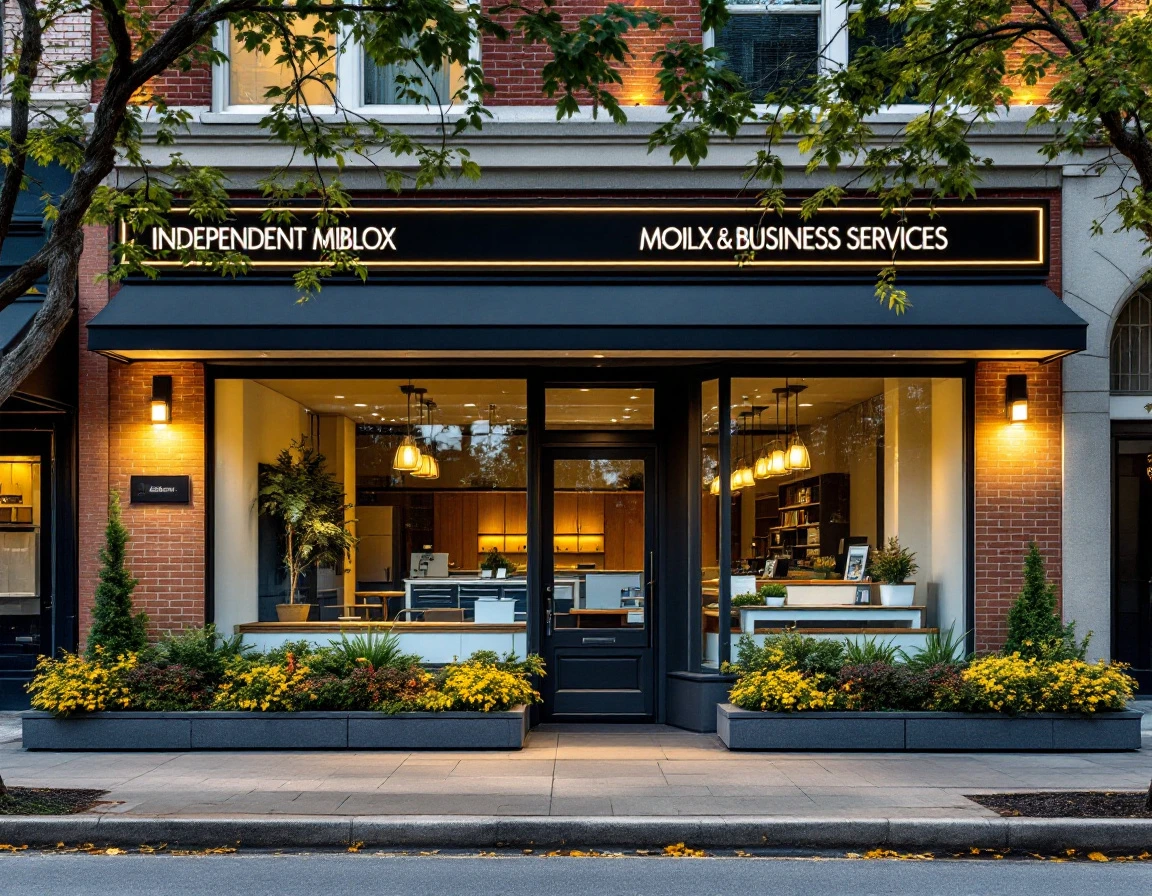
Local search terms outperform national keywords in two critical ways: they convert better and face less competition. When someone searches for "mailbox rental in Boulder" or "private mailbox services Asheville," they're ready to visit a store, not browsing general information. National chains like UPS Store and FedEx Office rarely optimize individual pages for mid-sized market names, leaving independent operators with a clear opening to rank faster for these high-intent queries.
Start by identifying location-specific search terms using Google Keyword Planner or Semrush. Focus on your service area's city names, neighborhoods, and nearby suburbs. A store in Austin might target the following location variations:
- "mailbox rental East Austin"
- "private mailbox Hyde Park"
- "business address Downtown Austin"
Your templates should address local pain points that matter to area businesses. Include references to local business address needs. Zoning compliance requirements specific to your city, proximity to commercial districts, and any regional regulatory updates affecting mail handling. A sample structure for a "Private Mailbox Rental in [City]" post might open with a description of the local business environment, explain how a real street address helpss [City] businesses meet licensing requirements, describe package receiving benefits for remote workers in [Neighborhood], and close with directions to your store location. Each city-specific page becomes a local SEO asset that compounds over time.
Topic Clusters for Mailbox Rental Authority
Before switching on automated publishing, map your content architecture around three to five pillar topics that anchor your business expertise. For mailbox rental operators, strong pillars include CMRA compliance and legal requirements. Mailbox rental benefits compared to alternatives, and business address solutions for remote teams. Each pillar becomes a full resource page—typically 1,500 to 2,000 words—that covers the topic thoroughly.
Once your pillars are live, create supporting cluster posts that expand on specific angles with location variants. A pillar page about CMRA compliance might spawn cluster posts like "CMRA Registration Requirements in Austin" or "How Dallas Mailbox Providers Handle Package Acceptance." Each cluster post links back to its pillar, signaling to search engines that your site owns that topic. Supporting content formats include how-to guides, local regulation breakdowns, and integration guides for business customers evaluating virtual mailbox services versus physical locations.
Automated publishing systems excel at batch-creating these interconnected posts. Instead of writing one article per week, you generate 30 to 50 cluster posts quarterly—four to six posts monthly across three to four service locations. This consistent cadence builds topical authority faster than sporadic publishing because search engines recognize your site as a reliable source across related queries.
The internal linking structure reinforces which keywords matter most, amplifying SEO authority for core business terms without manual outreach or link-building campaigns.
Implementation Timeline & Measurement
Breaking the autonomous publishing workflow into a 90-day roadmap keeps operators focused on milestones instead of overwhelmed by the full scope. Month one centers on setup: build your three pillar posts manually, create location-specific templates with variable fields for city names and ZIP codes, and configure your automation platform to merge location data into those templates. By the end of week four, you should have your first batch of 15 location posts ready to schedule.
Month two shifts to publication and early monitoring. Release your initial 15–20 city-specific posts across different neighborhoods and nearby municipalities. Open Google Search Console and filter for queries containing "mailbox rental in [City]" or "[Neighborhood] business address services." Track impressions first—these show Google is matching your content to local searches—then monitor click-through rates as rankings improve. Posts typically surface in the top 50 results within the first few weeks, giving you baseline data to refine titles and meta descriptions.
Month three is optimization based on early performance. Check Search Console to identify which city-specific queries moved into the top 20 positions, then strengthen internal links from those posts back to your pillar pages. Posts climbing into the top 10 for location-specific queries signal real traction. If ParcelPuffin POS integration is active. Cross-reference organic traffic spikes in Google Analytics 4 with new mailbox rental inquiries or walk-in customers who mention finding you online. This closes the loop between rankings and revenue.
Ranking improvements typically appear within 60 to 90 days for lower-competition neighborhood queries.Sustained growth requires ongoing publication—adding 10–15 new location posts quarterly and refreshing older posts with updated internal links. The October 2026 measurement deadline gives operators six months to build a proven content engine before evaluating whether autonomous publishing replaced the need for freelance writers entirely.

Cost Savings & Competitive Advantage
Autonomous publishing changes the economics of content production. Freelance writers command premium rates per post, while tool subscriptions amortized across dozens of posts bring per-unit costs down to a fraction of traditional rates. At scale, this model allows operators to publish more frequently without stretching their budgets.
Consider a practical scenario: publishing 40–60 location-specific posts annually via automation costs $500–1,500 in tool subscriptions and template setup. The same volume through freelance writers runs $2,000–9,000. As you add more service areas—expanding from five cities to ten, or from mailbox rentals into notary and passport photo content—the savings compound while the workload remains minimal.
The financial return extends beyond cost avoidance. Strategic automation investments that generate top 10 rankings across multiple locations can drive consistent local inquiry traffic month after month per keyword. Converting even a fraction of those inquiries into mailbox rentals or recurring notary clients delivers measurable returns within the first year.
SEO traffic from automated content compounds over time. Operators typically rank for 20+ location-specific keywords within 90 days, creating defensible competitive moats that national chains struggle to replicate locally. While UPS Store focuses on branded search, your autonomous system captures long-tail queries like "private mailbox rental downtown Boise" or "business address service near Pioneer Square"—terms that drive high-intent local traffic without competing against enterprise marketing budgets.