
Why Apparel Printing Drives Retail Margins
Traditional retail operates on thin margins. Clothing resale leaves little room for operational costs or market fluctuations after covering the cost of goods sold. When you add apparel printing to your store, you flip this equation entirely. Custom apparel printing commands healthy margins because you're selling a service, not a commodity.
A small store processing custom orders can build meaningful monthly profit with minimal overhead beyond initial equipment investment. The math works because custom orders justify premium pricing—customers pay for design work, personalization, and quick turnaround rather than competing with big-box retailers on price alone.
Real-world examples prove the model. A gift shop in Tennessee added custom T-shirts for local school events and corporate clients, transforming their lowest-margin product category into their most profitable. Another retailer bundled branded merchandise with event planning services, creating repeat customers who returned for personal branding projects.
The July 2026 launch window aligns perfectly with Q3 demand. Schools order spirit wear in late summer, sports leagues need uniforms before fall seasons start, and businesses refresh branded apparel for conferences and trade shows. Launching now positions your store to capture this seasonal surge when custom apparel spending peaks.
Fulfillment Models: In-House vs. Partner vs. Dropship
The fulfillment model you choose determines your startup costs, operational complexity, and how much you keep from each sale. Three paths dominate the custom t-shirt printing business, each suited to different business stages and capital positions.
- In-house printing requires equipment investment ranging from $2,000 for a basic heat press and vinyl cutter to $15,000 for a quality direct-to-garment printer with pretreatment capabilities. This model maximizes per-unit margins because you control production costs directly. Expect to invest time learning color management, garment preparation, and troubleshooting technical issues. The break-even threshold typically lands around 50 orders per month, assuming average order values of $150 to $200.
- Local partner fulfillment shifts production overhead to an established print shop while you handle customer relationships and order management. This approach reduces margins by 15 to 25 percent compared to in-house work, but eliminates equipment purchases and skill development. You need reliable partners who meet quality standards and turnaround commitments. This model fits stores with limited space or capital but consistent order flow above 20 units monthly.
- Print-on-demand dropship minimizes capital risk entirely. Services like Printful or Printify handle production and shipping, but margins shrink by 30 to 40 percent. The model works for stores testing custom apparel viability or handling fewer than 20 orders monthly. Scaling remains simple because you never touch inventory or equipment.
Apply this decision framework: stores validating demand should start with dropship or local partners. Once monthly volume grows and you've built a financial cushion for equipment investment, in-house operations become self-sustaining through recovered costs and improved margins. Capital availability and physical space ultimately determine which path makes sense for your operation right now.
In-House Printing Setup and Skills
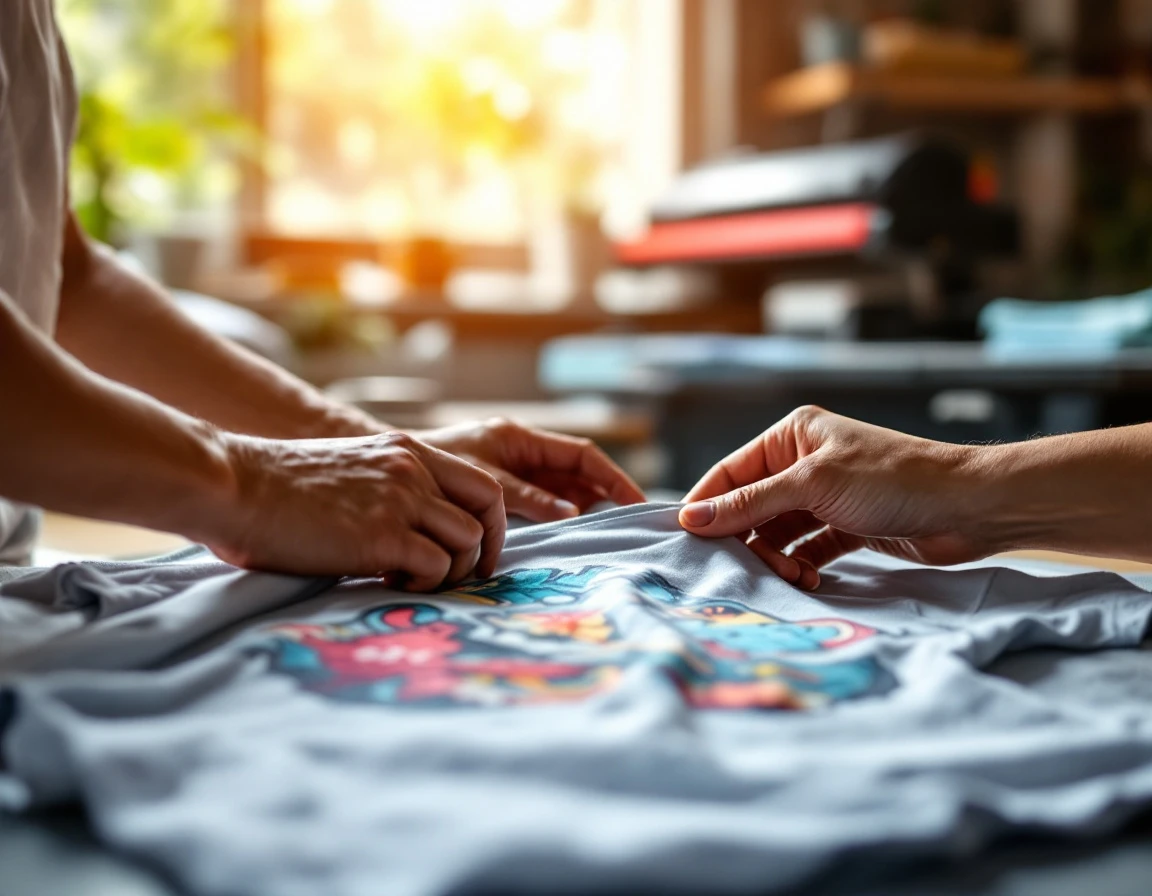
Two printing methods dominate the in-house market for small retailers. Direct-to-garment (DTG) printers handle complex, multi-color designs with minimal order volumes — ideal for one-off custom requests or small batches. You'll need a DTG printer ($2,000–$8,000), heat press ($300–$800), pre-treatment sprayer ($150–$400), and basic design software. Screen printing becomes cost-effective around 20 units per design, offering lower per-unit costs but requiring separate screens for each color. Equipment runs $1,500–$5,000 for a manual press, screen frames, emulsion, and exposure unit.
Plan for 150–300 square feet to accommodate printing equipment, garment storage, drying racks, and quality control space. Operator training takes one to two weeks to master color matching, pre-treatment techniques, heat-and-pressure settings, and inspection protocols. A single trained operator can handle 15–25 orders weekly without burnout by batching similar designs and maintaining consistent workflow. Track inventory through your POS system to prevent stock-outs on blank garments, and schedule operators based on order volume patterns rather than fixed shifts.
Local Partner and Dropship Economics
Local screen printers and embroiderers deliver healthy retail margins when you act as the customer-facing storefront. A hoodie that costs you a modest wholesale price retails at a comfortable markup, leaving solid profit per unit after production. Turnaround runs just several business days, and you build direct relationships with vendors who understand your quality standards and rush timelines.
National print-on-demand platforms handle production and shipping but eat into your profit margins. Production costs consume most of the wholesale price, leaving only a thin slice of revenue when the item sells at retail. The trade-off? Zero inventory risk, no vendor invoicing, and instant scaling without storage constraints. Dropship custom apparel printing works best when testing new designs or serving sporadic demand.
Transition to local partnerships when monthly order volume justifies bulk pricing and you need faster turnaround for repeat clients. Managing multiple vendors adds procurement overhead, but margin improvement often covers the administrative time once you exceed 20–30 orders per month.
Calculating Real Margins and Break-Even Volume for Custom Hat Printing and Apparel
Understanding unit economics separates profitable apparel operations from money-losing side projects. For in-house DTG printing, materials and labor—blank shirt, ink, pretreatment, and operator time—represent your primary cost per garment. When you retail that same shirt at a healthy markup, the margin per unit becomes meaningful. With modest equipment investment amortized over a reasonable timeframe, you reach profitability quickly enough that most stores achieve it within their first season of operation.
Local partnership economics shift the numbers: your wholesale cost per shirt climbs when buying through intermediaries, and retail pricing must remain competitive within market standards. This creates a meaningful margin per unit with zero equipment investment. Lower risk, but you'll need to build volume before unlocking better supplier terms. Dropship models compress margins further—your cost of goods rises while retail prices stay locked in place, leaving thin profit per shirt. The trade-off? You can scale to hundreds of orders monthly without hiring staff or leasing production space.
Hidden costs shape real profitability. Budget 15–20 minutes per custom order for design approval, production coordination, and quality checks. Returns consume 3–5% of revenue in shipping and replacement costs. Factor these into your pricing: a store launching with 15 orders in month one, growing to 30 in month two, and hitting 50 by month three can realistically clear $2,000–$5,000 monthly profit depending on fulfillment model. Build a simple spreadsheet with your actual costs—blank inventory, consumables, labor rate, and service time—to model your break-even point before committing capital. For more guidance on how to price custom apparel for resale. Consider retail-specific pricing strategies that cover both direct costs and operational overhead.
Launch Timeline and First 90 Days: How to Start Apparel Printing Service
A successful July 2026 launch follows a structured twelve-week timeline that aligns equipment setup or vendor onboarding with Q3 seasonal demand. Start with weeks one and two in early July by finalizing your fulfillment model — sign a partnership agreement with a local printer, complete vendor setup on a dropship platform, or order DTG or screen printing equipment. This two-week window gives you time to negotiate payment terms, review service agreements, and confirm turnaround times before production begins.
Weeks three and four focus on building your initial product lineup. Design five to ten core apparel items — think classic crew-neck tees, hoodies, and polo shirts in neutral colors — and configure your ordering workflow. If you're using a partner platform, integrate their catalog into your print shop management system and test the order handoff process. Map SKUs, set pricing tiers, and create sample mockups for customer review. Understanding what custom apparel printing entails helps you explain options and timelines to customers during these early conversations.
Weeks five and six in early August launch a soft test to your existing email list and repeat customers. Offer a limited selection to capture quality feedback, track production lead times, and verify margin calculations with real order data. This two-week trial period reveals workflow friction points before you promote widely, letting you adjust pricing, refine designs, or switch fulfillment partners if needed. Research shows that 80% of consumers consider personalization important to their shopping experience, making this test phase critical for understanding what customization features resonate with your audience.
Weeks seven through twelve cover your full promotional push. August and September capture back-to-school demand, sports league orders, and corporate gift requests. Promote your apparel line through in-store signage, email campaigns, and social media, while monitoring order volume to optimize inventory levels or production schedules. By mid-September, you'll have three months of margin data and customer feedback to guide expansion into new apparel categories or seasonal designs. To maximize efficiency during this ramp-up period, consider implementing workflow automation strategies that reduce manual handoffs between customer service and production teams.